
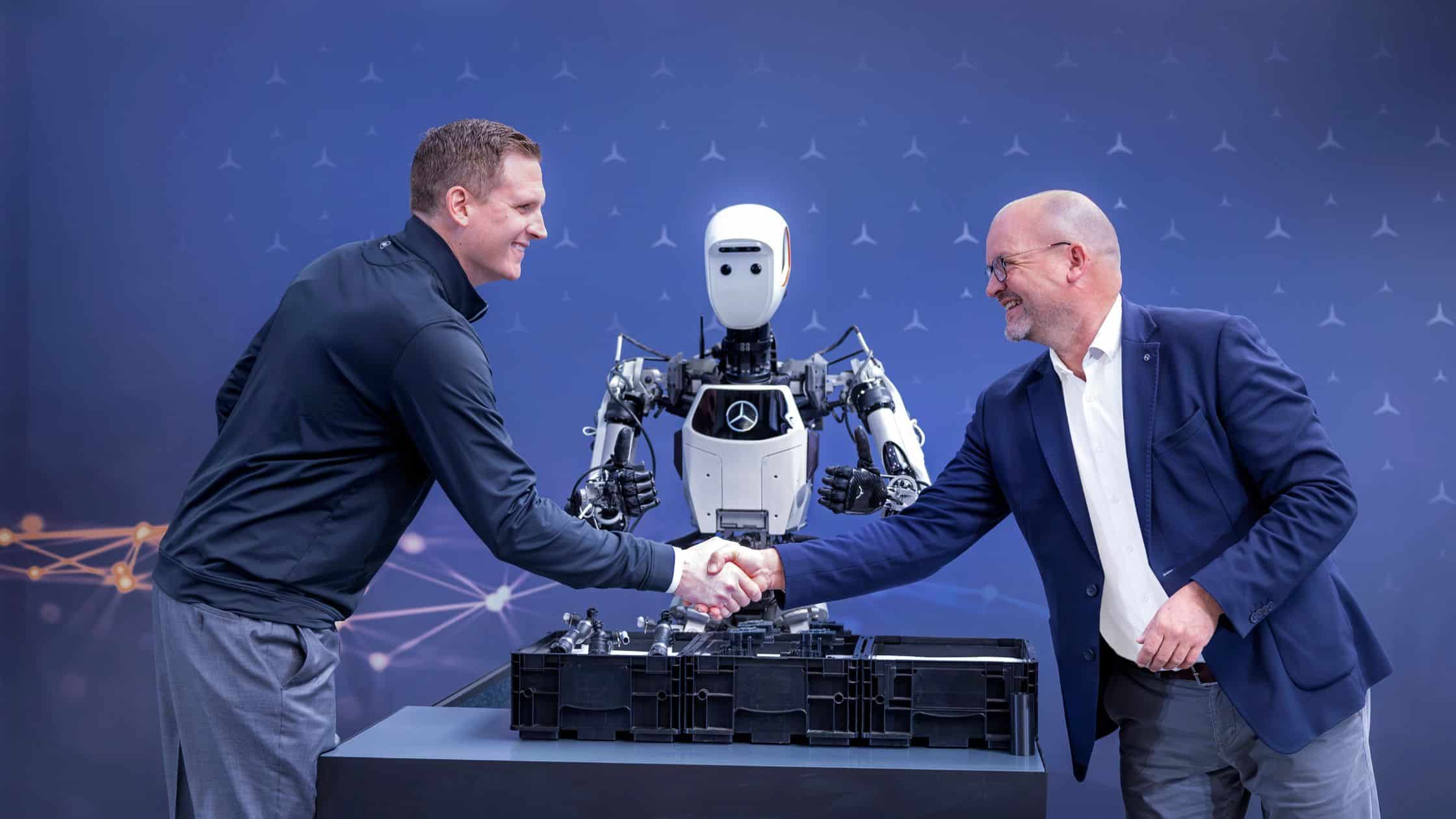
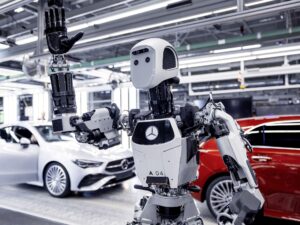
Mercedes-Benz has quietly moved beyond boardroom briefings and into the factory aisle. This year the German carmaker took a material stake in Apptronik, the Austin robotics firm behind the humanoid “Apollo” robot, and began piloting those robots on real production floors in Berlin and Hungary. The move is more than PR theatre. It is a strategic pivot that signals how big industrial players are treating humanoid robotics, not as a sci-fi curiosity, but as a duck test for where labour, cost and resilience intersect.

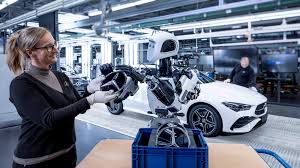
Walk through Mercedes’ Digital Factory Campus in Marienfelde and you will see the familiar choreography of humans and machines, now with a strange, upright addition. Apollo looks like a go-fer from a near future. It carries bins, fetches components, and performs repetitive intra-logistics tasks so human workers can focus on fine assembly. It is not replacing skilled hands. It is augmenting them. Apptronik and Mercedes are explicit about that, and they are testing the theory in environments where margins are razor thin and errors costly.
The money that greases this experiment is significant. Apptronik closed an oversubscribed Series A that swelled to roughly $403 million, with participation from Google and other deep pockets, and Mercedes joined that investor list. Reports even suggest Mercedes committed above €100 million in follow-on investment while also rolling the Apollo into live trials. That cash is intended to move Apollo out of lab demos and into sustained, safety-certified production. Investors are banking on the next wave of AI enabling robots to handle unstructured, human spaces.
This is not the first time an automaker fell in love with automation. The Japanese and German firms perfected articulated arms for repetitive heavy lifting decades ago. What changes with humanoid robots is mobility and versatility. Humanoids can, in principle, navigate the same corridors as humans, open doors, use hand tools and fit into workflows without expensive retooling. For factories juggling a mix of legacy lines and modern cells, that flexibility is tempting. But temptation comes with costs. Early attempts at full automation in car plants have a checkered history. Tesla’s struggles with over-automation in the Model 3 ramp are a cautionary tale many now cite. Humanoid robots must demonstrate uptime, predictability and a clear cost benefit before they scale.
On the shop floor, the math is simple and brutal. If a robot can operate 20 hours a day doing repetitive tasks, and if it reduces defect rates and time lost to worker shortages, it becomes a balance-sheet item, not just a tech novelty. Apptronik’s design choices are targeted at that equation. Apollo uses electrical actuators for finer control, swappable batteries to reduce downtime, and teleoperation training to teach complex tasks. Those engineering choices reflect a brutal pragmatism. The company wants robots that can be maintained and integrated by plant engineers, not exotic prototypes that live in a clean room.

Yet the turning points are not only technical. The partnership with Mercedes is a political and cultural signal. A legacy brand, with decades of manufacturing knowledge and an exacting quality bar, is implicitly endorsing Apptronik’s roadmap. That endorsement helps churn capital and opens doors to supply chain insiders who, until recently, regarded humanoid robotics with healthy scepticism. For Apptronik, that is a validation that accelerates go-to-market conversations with logistics firms, contract manufacturers and even healthcare providers exploring robot aides.

Still, there are planks missing from the bridge to mass deployment. Cost per robot remains steep. Integration costs sensors, safety cages where humans and robots interact, software, training can swallow initial gains. Regulatory and insurance regimes for humanoid workforces are nascent. And crucially, human acceptance is nontrivial. Workers are often less worried about being replaced and more worried about new fault lines in workplace safety, shift patterns and job quality. Mercedes, for its part, frames Apollo as an assistant, and its pilot projects are deliberately conservative in scope and geography. Trials in Hungary and Berlin are pragmatic choices, placing robots where labour shortages bite and where regulatory oversight is manageable.
Investors see a broader narrative. Big tech and deep AI labs have started translating digital models into physical agents, and logistics firms have long embraced automation. If robots like Apollo can reliably operate in mixed human environments, the addressable market explodes beyond automotive. Warehousing, elder care, construction and retail all become plausible fields. This is partly why heavy hitters like Google and institutional funds moved into Apptronik’s round. The bet is that a “ChatGPT moment” for robotics an inflection where perception, planning and manipulation reach usable performance could rearrange industrial economics.
For corporate and global suppliers, the lesson is immediate. Automation is no longer only about replacing the biggest cost line. It is about resiliency. Firms that can blend human judgement with robotic consistency will be better placed when labour markets tighten, when supply chains are stressed, or when cost inflation bites. The hard part is sequencing adoption. Start with low-risk, high-frequency tasks, measure outcomes, and build trust with the shop floor. Mercedes’ pilots are precisely that kind of careful choreography.

In the end, this is a story about choices. Mercedes and Apptronik chose a staged, partnership-driven path. Investors chose to back a risky hardware vision with a lot of capital. Workers and unions will choose how to respond as pilots become permanent. For readers tracking technology and industry, the question is less about if humanoid robots will arrive, and more about how and at what cost. If Apollo’s quiet steps become mainstream, the next decade will look less like a factory floor of isolated arms, and more like a shared ecosystem where humans and humanoids work side by side, each doing what they do best.