Team, trajectory, and the startup rewriting climate tech
Imagine walking through the air and scooping up invisible carbon dioxide like coins into a jar. That might sound like science fiction. But for Greenlyte Carbon Technologies, a German-startup founded in 2022, it’s their business proposition. The effort: capture CO₂ directly from the air, pair it with renewable hydrogen, and convert it into valuable products such as methanol or synthetic aviation fuel.
Founding strength
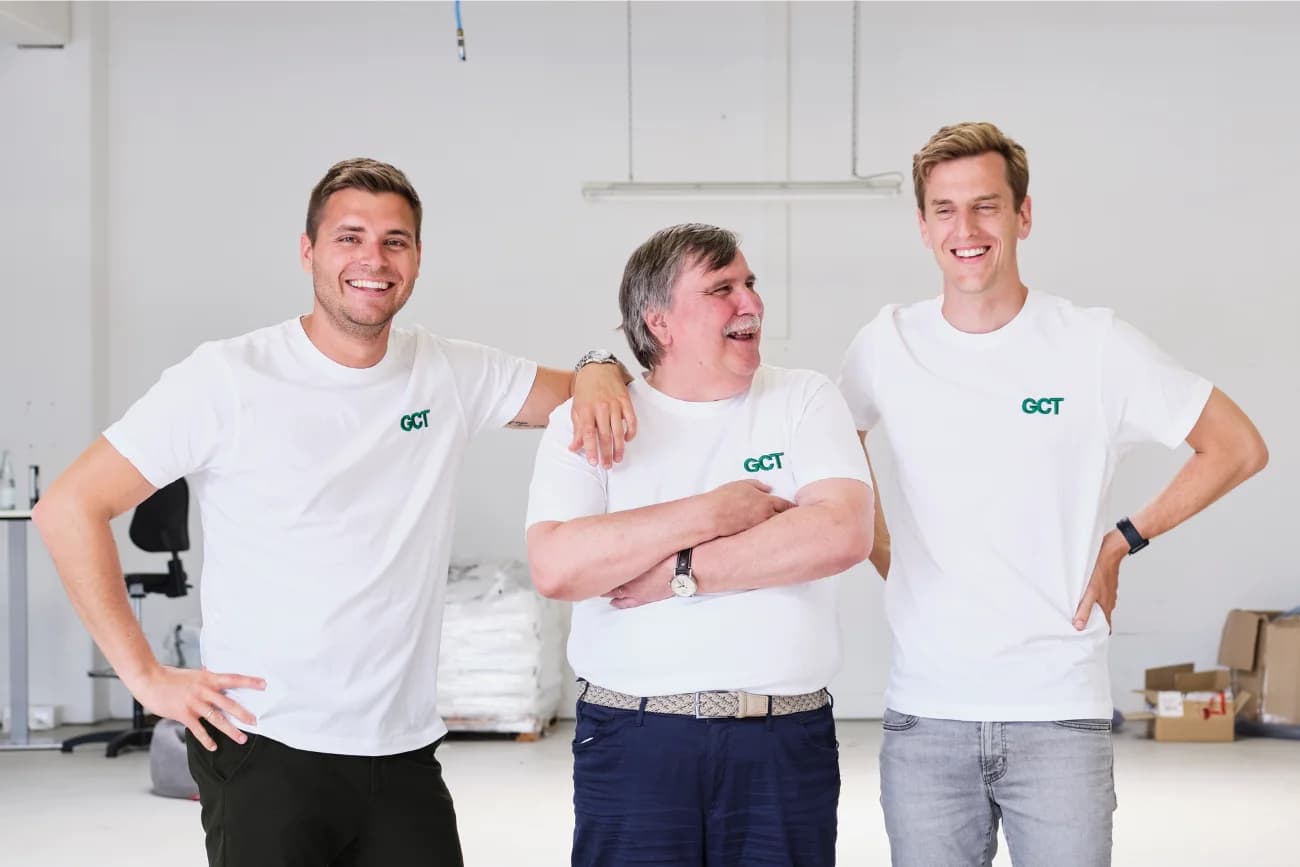
Greenlyte was co-founded in Essen, Germany by Florian Hildebrand (CEO), Niklas Friederichsen and Peter Behr, scientists and engineers steeped in chemical process and energy systems. In short order they built a 50-plus person team and raised more than €20 million by early 2025. What sets them apart is the multidisciplinary mix: deep tech research meets industrial process design meets startup agility. That gives the company credibility with both heavy-industry partners and investor capital.
Why this market, now?
Hard-to-abate sectors like steel, aviation, and chemicals are looking for solutions beyond incremental energy efficiency. Removing CO₂ from the atmosphere and converting it into feedstock closes a loop no one else is reliably servicing today. Greenlyte’s own projections aim for large-scale carbon capture by some public reporting; they target “0.1 Gt of CO₂ per annum by 2050”. Considering the global emissions economy, that’s a bold target but the upside is equally huge.
The One-Line Value Play
Greenlyte’s unique value proposition is clear: capture CO₂ from ambient air with a novel liquid-sorbent process while co-producing green hydrogen, then convert both into value-added hydrocarbons or feedstock. Their innovation lies in the cost efficiency; their process reportedly uses lower energy, lower heat/pressure than many existing direct air capture (DAC) systems. In practice, that means they are aiming to change CO₂ from waste to raw material, making what was a liability into a commercial asset.

Business model & revenue potential
Greenlyte’s business model has several streams:
Plant-asset sales or licensing: They develop modular DAC units which can be sold or licensed to industrial partners.
Feedstock & offtake agreements: They will offtake the captured CO₂ and hydrogen themselves (or through partner ecosystems) and convert into e-methanol, sustainable aviation fuel (SAF), or other green hydrocarbons. For example, the company is collaborating with Düsseldorf Airport to build a first-of-its-kind DAC-to-SAF facility.
Carbon credits / negative emissions value: Removing CO₂ ultimately has value in compliance or voluntary carbon markets, though as a business go-to-market this is more speculative.
Given these multiple revenue levers, the revenue potential is substantial. If they scale to multiple plants capturing tens or hundreds of thousands of tonnes per year, and sell both the captured carbon and the derived fuels, the business becomes highly scalable and high-margin relative to many pure carbon-offset models.
Traction to date
Greenlyte has already achieved several tangible milestones: closing a €10.5 m pre-Series A round in March 2024. They announced a grant-supported FOAK (first-of-a-kind) DAC-to-e-methanol facility at the Marl chemical park in Germany, capacity up to 1,000 tons annual e-methanol production. And the airport-fuel project in Düsseldorf, planned to yield 250 tons of SAF per annum. So they are bridging from lab to demonstration and into early commercial deployments. For a startup less than three years old, that’s impressive.
Scale & international expansion
Scaling is built into their model. Their liquid-sorbent DAC units are described as modular, a crucial feature for replicability in different geographies. Partnerships with airports and industrial hubs also embed them into existing supply chains and infrastructure. The synergy between CO₂ capture, hydrogen, synthetic fuel production creates a platform rather than a single-product business. Moreover, global demand for low-carbon fuels and feedstock gives them an international runway beyond Germany.

Competitive landscape
They face competition from other DAC and carbon-utilisation players, some modular DAC companies, some biochar firms, some carbon-capture for chemicals. But many of those focus either solely on capture (with no conversion path) or on fairly limited niches. Greenlyte’s dual process (CO₂ capture + hydrogen production + conversion) gives it a differentiated edge. Yet risk remains: DAC is still capital intensive, demonstration plants are expensive, and scale-up will require significant investment and offtake commitments. Their ability to convert demonstration success into full-scale industrial deployment will define their competitive lead.
Exit or long-term value play
From an investor standpoint, Greenlyte presents multiple exit paths. One possibility: a strategic acquisition by a major chemicals, fuels or energy company seeking to integrate carbon-capture + feedstock conversion capability. Another: an IPO once the demonstration plants turn into commercial roll-out and recurring revenues. A third option: selling/licensing their modular DAC plant technology globally, creating a recurring-licensing revenue model. The combination of climate relevance plus industrial feedstock value gives it a stronger multiple than many pure-carbon offset plays.
Financial discipline and execution
Although still early stage, the funding story and partnerships suggest financial discipline. The company appears to be building step-by-step from lab proof to demonstration to commercial scale, rather than overspending on unproven technologies. The March 2025 grant support for the Marl plant indicates smart use of public-funding leverage. Keeping capex disciplined and aligning deployment with credible offtakes will be key.

Redefining carbon
Greenlyte’s vision goes beyond being just a carbon-capture company. Their mission: transform the global industrial system by making captured carbon a feedstock for fuels and chemicals. In their own words they aim to “defossilise” hard-to-abate industries. If they achieve even a fraction of their stated targets, the impact could ripple well beyond climate tech into energy, manufacturing and aviation.
What makes Greenlyte compelling is the marriage of a strong founding team, a clear and unique value proposition, a vast market opportunity and credible early traction, all focused on a global problem with enormous stakes. The next phases will be about scaling fast while controlling costs, signing large industrial offtakes, expanding globally and staying ahead of the competition. If they succeed, they won’t just capture carbon, they will turn it into profit, feedstock and fuel, and in the process help redefine how heavy industry and aviation think about emissions. The broader world will watch with high expectations.