

Future of search is straight answers, not endless clicks
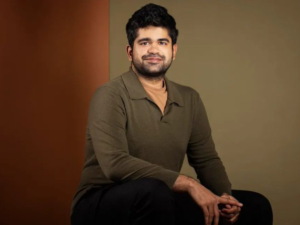
Aravind Srinivas doesn’t remember the exact moment he decided Google was broken, but he remembers the feeling. It was 2022, and the then-DeepMind researcher found himself drowning in blue links, clicking through pages of SEO-optimised junk to answer what should have been a simple technical question. “I thought: this is insane,” he recalls. “We have all this AI capability, and we’re still making people hunt for answers like it’s 1998.”
That frustration birthed Perplexity AI, the answer engine that has become one of the most scrutinised and fastest-growing challengers to Google’s two-decade search monopoly. By December 2025, Perplexity was fielding over 600 million queries monthly, had raised capital at a $9 billion valuation, and was being sued by News Corp for what it called “content kleptocracy.” Srinivas, just 32, had become the face of a new breed of founder: technically deep, unapologetically aggressive, and willing to run straight into regulatory fire if the product demanded it.

The Making of a Maverick
Aravind Srinivas’s story does not look like a typical Silicon Valley startup tale. He was born in Chennai and grew up in a middle-class family. His father worked as a sales executive at Jaggards, a company that makes pharma equipment. Entrepreneurship was not the plan. Like many Indian students, his path was clear: coaching classes, board exams, and the long IIT preparation grind.
He got into IIT Madras and studied electrical engineering. After that, he followed a familiar route for ambitious engineers and moved to the US. He went on to do a PhD at Berkeley, then worked at OpenAI and DeepMind. There, he worked closely with teams building the early transformer models that later reshaped AI. But Srinivas was not comfortable staying inside Big Tech. He grew impatient. The technology was improving fast, but real products were reaching users very slowly. That gap bothered him. He felt the models could already do far more than what companies were shipping.
His first startup did not work. He built a conversational shopping assistant. The technology was solid, but users did not care enough. The idea failed. That experience taught him a hard lesson: it is not enough for tech to be smart. Timing and distribution matter more than clean design. When he started Perplexity in 2022 with co-founders Johnny Ho, Denis Yarats, and Andy Konwinski, he applied that lesson. The product focused on a daily problem people actually feel, finding clear answers online without wasting time.
What makes Srinivas different is not just his technical skill. He is comfortable making tough calls. He works with deep focus and discipline, but can also be persuasive when talking to investors. Some see him as mission-driven. Others see pure ambition. Both views have some truth. That mindset shapes Perplexity’s culture. The company moves fast and stays lean. Decisions are made quickly, sometimes too quickly. There is little patience for long debates or slow product cycles.
When users complained about wrong answers, Srinivas admitted the issue openly and pushed fixes within weeks. When publishers accused Perplexity of using their content without permission, he did not retreat. He argued that summaries are the future and that old paywalls will not survive. This mix of strong technical depth and aggressive business thinking is what makes Srinivas powerful, and also controversial.

How to Compete When You’re Not Supposed To
Srinivas made a bold and risky choice. He decided to take on Google in search. Not a small part of search. Not a niche like developers or young users. Just search itself. Most investors thought it was crazy. Google controlled about 90% of the market, had endless money, and a twenty-year head start. Srinivas did not worry about that. He believed search was changing, from showing links to giving direct answers. That belief turned out to be right.
His approach to building the company was unusual. While other startups built closed platforms, Perplexity stayed open. Anyone could ask questions without signing up. While rivals chased big enterprise clients, Srinivas focused first on making a product that everyday users truly loved. He often said that when consumers care deeply about a product, businesses follow later. He did not believe the opposite worked.
He was also very careful with money. Even after raising $165 million from well-known backers like Jeff Bezos, Nvidia, and IVP, Perplexity stayed small and focused. There were no flashy offices or unnecessary hires. Almost all spending went into running the AI models, improving them, and growing the product. By mid-2025, the company was handling billions of tokens every month while keeping costs surprisingly low for a company its size.

When Ronaldo Came Calling
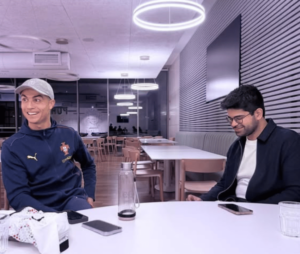
In what might be the most unexpected investor announcement of 2025, Cristiano Ronaldo joined Perplexity’s cap table. The football legend’s investment, announced in late 2025, sent shockwaves beyond the tech world. This was not a celebrity putting money into a startup just for publicity. Ronaldo’s team had already been using Perplexity for months. They used it to study performance data, analyse opponents, and help manage his businesses, including hotels, fragrances, and the CR7 brand.
For Perplexity CEO Aravind Srinivas, Ronaldo’s entry meant more than funding. It confirmed his core belief about the product. “We’re not building only for Silicon Valley,” he said in a rare interview after the announcement. “We’re building for people who need quick and clear answers. Athletes, doctors, students, and business leaders. Cristiano understands that.”

The partnership also showed Perplexity’s plans to reach a much wider audience. Ronaldo’s social media following of over 600 million people offered global reach that money alone cannot buy. More importantly, it strengthened Perplexity’s image as a tool for everyday users, not just enterprises or developers.
Some critics called the move celebrity hype. Srinivas disagreed. He saw it as proof that Perplexity had grown beyond a niche tech product. When one of the world’s most business-smart athletes backs your vision, people notice. By December, three other high-profile athletes and two major sports franchises had reached out about enterprise partnerships.
Standing His Ground When the Heat Was On
In October 2024, Dow Jones and the New York Post sued Perplexity, accusing it of using paid articles for free and stealing traffic and revenue. Other publishers soon joined.
Aravind Srinivas did not back down quietly. He went public, launched the Perplexity Publishers Program, and offered revenue sharing to publishers. Some agreed, many refused. He argued that summaries with clear credit sent readers back, not away.
Perplexity fought the lawsuits but also played smart. By December 2025, it signed paid content deals with TIME, Der Spiegel, and Fortune. Srinivas stuck to his belief that public web data was fair use, while bending where business demanded it.
It summed up his style perfectly. Fight for principle, adapt to survive.
The Moment Perplexity Grew Up
In June 2025, Perplexity hit a turning point with Perplexity Enterprise. Built for large companies drowning in internal data, it offered private, custom answers at $40 per user per month. Big names like Zoom, Databricks, and Bridgewater signed on fast. This was more than revenue. It proved Perplexity was a real business platform, not just a Google alternative. By year end, enterprise revenue was set to hit $50 million, growing at 300 percent every quarter.
Scaling was brutal. To keep up, Aravind Srinivas struck a bold deal with Nvidia for early H100 chips in exchange for equity. Risky, yes. Necessary, also yes.
Perplexity moved fast. Voice search shipped in three weeks. Better citations led to Pro Search. No overthinking, just building, learning, and shipping.
2026: The Make-or-Break Year
As Perplexity moves into 2026, Srinivas is entering the most important phase of his journey. The company is reportedly planning an IPO in late 2026 or early 2027. If that happens, it would be one of the fastest AI startups to go public. The pressure is rising. The big question is simple: can Perplexity become a long-lasting platform, not just a useful tool?
The plan ahead is bold. The first focus is global growth. Perplexity is rolling out local versions in India, Japan, and Brazil. These are markets where Google’s grip is weaker and where mobile users prefer quick, direct answers. The second push is into enterprises. Srinivas wants Perplexity to sit at the centre of company knowledge, acting as the main AI interface for employees. This puts it in direct competition with Microsoft’s Copilot.
The biggest bet is Perplexity OS. This is a rumoured system layer that would build Perplexity directly into browsers, phones, and work tools. If it works, users will not need to open Perplexity separately. It will always be there in the background. The shift from being a destination app to becoming core infrastructure is what the company is betting on.
Rules and regulation will play a huge role. New AI laws in Europe and possible antitrust action in the US could limit how Perplexity uses data or earns money. Srinivas is aware of this risk. His approach is to move fast. Ship new features, grow users, and become deeply embedded. The goal is to make Perplexity so essential that it becomes hard to roll back.

The Signal in the Noise
Aravind Srinivas represents something larger than Perplexity. He’s the vanguard of a generation of founders who don’t ask permission, who believe that technological superiority justifies regulatory provocation, and who see incumbent market leaders not as immovable forces but as legacy systems waiting to be disrupted.
His journey signals a shift: the return of founder-led, product-obsessed companies willing to play long games in capital-intensive markets. It’s a model that works when you’re right—and catastrophic when you’re not. The world will be watching in 2026 to see which version of that story Srinivas writes. For now, he’s still asking questions. And increasingly, the world is listening for his answers.

Perplexity: Google, But It Actually Thinks
• Answers first, links second
It gives you a clean, direct answer upfront, then shows sources below. No scrolling through ten blue links.
• Live web + citations
Responses are grounded in real-time web data with clickable sources. You can check facts instantly, which matters for research and journalism.
• Follow-up thinking
You can keep asking layered questions in the same thread, and it remembers context. Feels like thinking out loud with a smart assistant.
• Copilot mode
When turned on, it actively asks you clarifying questions and explores angles instead of waiting for perfect prompts.
• Research-friendly UX
Minimal clutter. No ads. No SEO junk. Built for people who want signal, not noise.
• Multiple models under one roof
You can switch between different AI models depending on task quality and depth, without jumping platforms.
• Fast, lightweight, no friction
Loads quickly, works smoothly, and does not push sign-ups aggressively. You get value immediately.
• Great for synthesis, not just search
Best use case is summarising complex topics, breaking down reports, tracking trends, and connecting dots across sources.
Google finds pages. ChatGPT reasons. Perplexity explains with receipts.