

You don’t see them on billboards.
You don’t vacation near them.
You don’t talk about them at dinner.
Yet right now, data centres are quietly becoming one of the most fought-over assets in the global economy.
If oil powered the last century, data centres are powering this one.

This Isn’t a Tech Story. It’s a Land, Power, and Water Story.
People think data centres are about software. They’re not.
They’re about electricity contracts, land zoning, water cooling rights, fibre access, and political permission. In 2025, the real scarcity isn’t data. It’s the infrastructure that keeps data alive.
AI workloads, cloud computing, streaming, fintech, defence systems, and government services all depend on uninterrupted compute. When demand spikes, servers don’t magically appear. Buildings do.
That’s why governments, utilities, and investors are suddenly obsessed with these grey, windowless boxes.

AI Turned a Strong Market Into a Frenzy
Data centres were already growing steadily. AI broke the curve.
Training and running large models requires massive compute density. Power demand is exploding. In some regions, a single data centre now consumes as much electricity as a small city.
This has triggered competition that feels almost absurd.
Cities court operators with tax incentives. Utilities prioritise grid upgrades for them. Governments fast-track approvals. Communities push back over water use and power strain.
Everyone wants the jobs and investment. Nobody wants the strain.
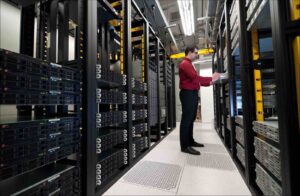
Power Is the New Bottleneck
Here’s the catch most people miss.
You can build a data centre in 18 months.
You cannot upgrade a power grid that fast.
Across the US, Europe, and parts of Asia, data centre projects are being delayed not by capital or demand, but by electricity availability. Grid congestion is real. Renewable supply isn’t always reliable. Backup generation raises environmental questions.
This is forcing a rethink.
Data centres are now built near power sources, not cities. Nuclear-adjacent zones are back in conversation. Long-term energy contracts matter more than land prices.
Energy strategy became business strategy.

Real Estate Investors Found a New Favourite
Commercial offices are struggling. Retail is selective. Logistics is crowded.
Data centres, meanwhile, offer long leases, creditworthy tenants, and demand visibility stretching a decade ahead. That’s catnip for institutional capital.
Private equity, infrastructure funds, pension funds, and sovereign capital are pouring in. Valuations are climbing. Yield expectations are compressing.
This isn’t speculative hype. It’s infrastructure logic.
When everything else feels uncertain, data feels permanent.

Governments Are Suddenly Very Interested
Data centres aren’t just economic assets. They’re strategic ones.
They host sensitive data. They power public services. They support national security infrastructure. That makes them political.
Governments now ask where data is stored, who owns the servers, and which laws apply. Cross-border data flows meet sovereignty concerns. Foreign ownership gets scrutinised.
In some countries, data centres are quietly being treated like ports or power plants.
Critical infrastructure, not optional real estate.

The Environmental Tension Is Real
This boom isn’t frictionless.
Data centres consume vast amounts of energy and water. Communities worry about strain on local resources. Environmental groups push back against unchecked expansion.
Operators respond with greener cooling, renewable sourcing, and efficiency claims. Some succeed. Some overpromise.
The tension isn’t going away. It will shape where data centres can exist, not just how many.

Why This Matters for the Global Business Climate
Data centres sit beneath everything digital.
If capacity tightens, costs rise. If power is constrained, innovation slows. If regulation hardens, expansion shifts geography.
This affects banks, media companies, manufacturers, governments, and consumers alike.
When compute becomes expensive or scarce, growth assumptions change.

The Bigger Picture
The data centre boom tells a bigger story about the current business atmosphere.
Growth is no longer just about ideas.
It’s about infrastructure.
About physical limits in a digital world.
The most important assets of the next decade won’t always be visible. They won’t have logos or storefronts. They’ll hum quietly on the outskirts of cities, consuming power, storing intelligence, and deciding which economies can scale and which ones can’t.
The future isn’t just online.
It lives in concrete, cables, and electricity.