How a family-run saddle maker became the world’s most enviable luxury brand by refusing to hurry
The conference room is silent. On the table lies a single unfinished handbag. A woman in her fifties, an artisan with three decades at Hermès, points to a stitch along the handle. “This is wrong,” she says quietly. The bag will be unmade and started again. Fifteen hours of work, discarded. No one flinches.
This isn’t a crisis meeting. It’s Tuesday.
Welcome to Hermès, the French luxury house that built a €15.2 billion empire on one principle: when the world speeds up, slows down. When competitors chase volume, they create scarcity. When the market demands scale, hire more artisans.
While the global luxury industry slows to 1–3% annual growth, Hermès reported €15.2 billion in 2024 revenue, up 15% at constant exchange rates. Their secret? The discipline to say no.

The Accident That Changed Everything
The story everyone knows begins on a plane. It’s 1983, Paris to London. Jane Birkin’s wicker basket spills onto her seatmate, Jean-Louis Dumas, the CEO of Hermès. She complains about the lack of a practical luxury bag. Dumas hands her a notepad. Birkin sketches her ideal design on an airplane sick bag. Two years later, she receives the prototype. The Birkin is born.
A charming origin story but the real story of Hermès is slower, deeper, and stitched across generations.

From Horses to Handbags
Thierry Hermès, born in 1801 in Germany, opened his first workshop in Paris in 1837, crafting harnesses and saddles for European nobility. For nearly a century, Hermès was synonymous with equestrian luxury.
Then came the automobile.
Émile Hermès saw the end of horses as the end of the business. Instead of abandoning craftsmanship, he adapted it. The same saddle stitches went into handbags, scarves, and belts. The technique stayed sacred. The object evolved.
It wasn’t diversification for growth, it was survival through reinvention.

The Philosopher at the Helm
Axel Dumas, the current CEO and sixth-generation heir, is unlike most luxury executives. He studied philosophy at the Sorbonne, earned a law degree, went to Sciences Po and Harvard. He started his career in banking before joining Hermès in 2003.
He’s not a loud leader. “Sometimes I see no failures,” he once said, “and I wonder if we didn’t push enough.”
At Hermès, being a Dumas doesn’t guarantee understanding. That comes from growing up in the family orbit, listening to dinner-table talk about leather shortages and workshop dilemmas. Dumas inherited not just a brand but a philosophy craft before commerce, patience over panic.

The Battle for Independence
In 2010, Hermès faced its biggest threat. Bernard Arnault’s LVMH quietly amassed a 14.2% stake in the company. The Hermès family called it “the largest fraud in French stock market history.”
For seven years, they fought back. The family formed H51, a holding group that united over half the company’s shares, securing its independence. By 2017, LVMH finally backed off.
That war explains everything about Hermès today. As Dumas said in 2024: “We don’t know how to run other brands. We know how to do Hermès.” It wasn’t arrogance, just clarity.
The Economics of Patience
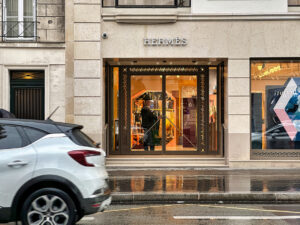
Hermès manufactures scarcity in an age obsessed with scale. You can’t walk into a store and buy a Birkin on the spot. You wait months, sometimes years. Each bag is stitched by a single artisan over 15 hours.
The company employs 7,000 artisans out of 25,000 employees, across 60 small workshops in France. Each site has no more than 300 craftspeople, keeping production human and local.
The results are staggering: €15.2 billion in 2024 sales and €4.6 billion in profit a 30% margin. That’s higher than tech companies.
“People no longer buy luxury based on income, but wealth,” Dumas told shareholders. “We sell to the rich, not the enriched.” It’s a ruthless distinction, but it defines their strategy perfectly.

What They Refuse to Do
Hermès has no marketing department. Dumas doesn’t believe in one. “Our job is to invent tomorrow’s desire,” he says, “not respond to today’s.”
They don’t do collaborations. Almost never. The Apple Watch Hermès partnership only happened because Dumas and Jonathan Ive found shared respect for design and craftsmanship. It wasn’t marketing, it was dialogue.
They don’t franchise. They don’t have a license. They don’t rush.

The Cost of Patience
Slow growth has real limits. Sourcing top-quality leather has become harder as farming industrialises. Global expansion brings new complexities, especially in Asia.
By 2020, Asia-Pacific (excluding Japan) became Hermès’ largest market, contributing nearly half of sales. Yet by 2024, while Japan rose 23%, Europe 19%, and the US 15%, China wavered as its economy cooled.
Digital transformation also poses a riddle. How do you translate Hermès’ intimate in-store ritual, the private rooms, the quiet ceremony of unveiling a bag into pixels? Online growth is inevitable, but digitising mystique is a delicate act.
Then there’s sustainability. In 2015, Jane Birkin herself asked to remove her name from crocodile bags after PETA exposed inhumane practices at supplier farms. The issue was resolved, but it showed the fragility of relying on exotic materials.
The €10 Million Handbag
In July 2025, Jane Birkin’s original prototype bag sold at Sotheby’s Paris for €8.6 million, making it the most expensive fashion item ever auctioned.
It wasn’t pristine, it was covered in stickers, worn, even had her nail clipper attached. That imperfection is what made it priceless. It told a story.
Birkin never chased luxury herself. She carried wicker baskets, then nothing at all. Yet her name became a symbol worth billions.

The Future Is Analog
Visit Hermès’ 23rd leather workshop in Riom, France, opened in 2024, and you won’t find robots. You’ll find apprentices learning the same saddle stitch used in 1837. “We have craftsmen who’ve been with us for three generations,” Dumas says. “They pass on their secrets.”
Over the past decade, Hermès revenues have tripled, and its share price has risen tenfold. The company sits on €12 billion in cash, ensuring independence for decades.

The Luxury of No
In a world where luxury is increasingly digital and instant, Hermès stands still by design. “We live in an unstable world,” Dumas said recently. “It’s important to be a resilient company that progresses when possible, and sits tight when it’s not.”
It’s the philosopher speaking again thinking about time, patience, and value.
True luxury isn’t about speed or excess. It’s about wanting something enough to wait. It’s about craftsmanship so perfect it outlasts its maker. It’s about saying no to everything that compromises your soul.
“We projected €12 billion revenue by 2025,” Dumas said during the last earnings call. “Here we are at €15 billion already. Sometimes I feel like saying, ‘Pinch me, I must be dreaming.’”
He isn’t dreaming. He’s running a company that refuses to move faster than its artisans can stitch.
The conference room is silent again. The artisan begins unmaking the bag, starting over. Fifteen hours ahead. No one is rushing. That’s the point.
In a world obsessed with disruption, Hermès remains the quiet revolution—proof that the most radical business strategy can still be patience.


