
Nobody says it out loud in meetings.
Nobody puts it in quarterly decks.
But across offices, Slack channels, and Zoom calls, the signal is clear.
Work is mentally heavier than it used to be.
In the current business atmosphere, mental health is no longer a personal issue. It’s a structural one. And the silence around it is starting to cost companies more than they admit.

Productivity Didn’t Break. People Did.
On paper, output looks fine. Tools are faster. Processes are optimised. AI fills gaps.
Yet burnout shows up everywhere. Absenteeism. Disengagement. Quiet quitting. Shorter tenures. Sharp drops in creative energy.
This isn’t laziness. It’s fatigue.
Employees are asked to do more with less, adapt constantly, learn new systems, and stay calm while job security feels fragile. The mental load compounds quietly.
You don’t see it in dashboards. You feel it in culture.

Wellness Perks Became Performative
Companies talk about mental health more than ever.
Meditation apps. One-off workshops. “Wellness days”. Slack reminders to log off.
But workers can tell the difference between care and optics.
A mindfulness session doesn’t help if workloads are unsustainable. A wellness policy doesn’t land if layoffs are frequent and communication is vague.
Mental health can’t be outsourced to an app.
Uncertainty Is the Real Stressor
The biggest driver of workplace anxiety isn’t long hours. It’s unpredictability.
People don’t know:
If their role will exist next year
How performance is evaluated in an AI-heavy workflow
Whether speaking up is safe
If loyalty is rewarded or ignored
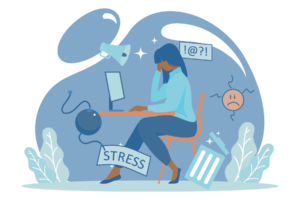
That constant ambiguity keeps the nervous system switched on.
Stress isn’t episodic anymore. It’s ambient.

Managers Are Burning Out Too
Leadership doesn’t escape this.
Managers are stuck translating pressure from above into calm for teams below. They absorb fear without being able to resolve it. They’re expected to motivate without promising stability.
Emotional labour is now part of management, but few were trained for it.
This creates a quiet crisis in middle management, the layer that holds organisations together.

Why This Is Becoming a Business Risk
Mental health isn’t just an HR issue. It’s an operational one.
Burned-out teams make conservative decisions. They avoid experimentation. They miss weak signals. They struggle with collaboration.
Innovation requires psychological safety. Chronic stress kills it.
In a competitive environment, mental fragility becomes a strategic disadvantage.

Employees Aren’t Asking for Comfort. They Want Clarity.
The demand isn’t for therapy at work. It’s for honesty.
Clear expectations. Transparent decisions. Predictable communication. Realistic workloads.
People can handle bad news better than silence. They can adapt to change better than uncertainty.
Mental health improves when trust exists.

The Shift Happening Quietly
Some organisations are adjusting.
They’re simplifying goals. Reducing constant change. Training managers in communication, not just performance. Normalising conversations about capacity, not just ambition.
These aren’t flashy moves. They don’t trend on LinkedIn.
They work.

The Bigger Picture
The current business atmosphere is intense, not because work is harder in absolute terms, but because it’s emotionally unstable.
Mental health became collateral damage in the race for efficiency.
Ignoring it doesn’t make it disappear. It makes it expensive.
The companies that last won’t be the ones that push hardest.
They’ll be the ones that understand this simple truth.
People don’t burn out because they care too much.
They burn out because they care without control.
And silence, in this moment, is the loudest signal of all.


