
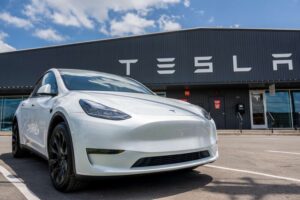
Tesla is likely to win regulatory approval in Europe and China for its driver-supervised Full Self-Driving (FSD) system as early as next month, CEO Elon Musk said on Thursday, as the electric automaker looks to boost software revenue amid slowing vehicle sales. While regulatory progress on FSD and early robotaxi deployments point to momentum in Tesla’s AI ambitions, the technology remains nascent relative to a valuation that far outstrips those of many technology and automotive companies.
“We hope to get Supervised Full Self-Driving approval in Europe, hopefully next month, and then maybe a similar timing for China,” Musk said at his first appearance at the World Economic Forum in Davos. Tesla has been seeking approval for the system in Europe, where tougher vehicle safety rules and a fragmented regulatory framework have slowed deployment compared with the U.S. Dutch vehicle authority RDW said in November it expected to decide on FSD in February. Tesla had said once it secures approval in the Netherlands, other EU countries can recognize the exemption and allow a rollout ahead of a formal EU approval.
In China, the smart features similar to FSD remain restricted to a limited number of vehicles as the U.S. automaker had to halt the software update deliveries last March, citing the need for additional regulatory approval. Tesla made a long-awaited update to its autopilot software in China last February. But some owners expressed disappointment that the system for which they paid more than $9,000 came with operational restrictions. FSD is classified as an advanced driver assistance feature that requires drivers to remain attentive, and regulators have scrutinized it amid concerns over the safety and oversight of automated driving technologies.


