
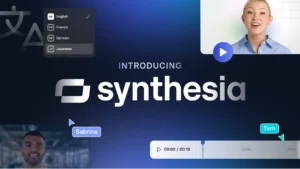
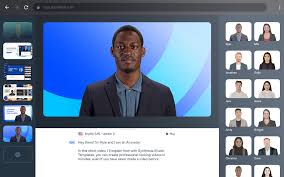
When you think of video, you think of cameras, lights, actors, long edit decks, and a crew that can feel like an army. Synthesia wants to make that whole orchestra vanish, and replace it with a single text box. Type a script, pick a presenter, choose a language, and minutes later you have a polished corporate video. For communications teams at big organisations, that promise is changing how work actually gets done.
The idea began as a neat technical trick, the kind that makes academics smile and marketers nervous. In 2018, Synthesia’s early demos most famously the clip where a BBC presenter appeared to speak Mandarin, Hindi, and Spanish made people pause, then argue, then realise what the technology could do. Those demos were both a proof of concept and a warning. They showed that synthetic video could be uncanny, cheap, and scalable. The founders, a mix of university researchers and entrepreneurs, leaned into the usefulness while trying to build guardrails around the risks.
Fast forward to January 2025. Synthesia closed a $180 million Series D, taking its valuation to about $2.1 billion, a landmark that put the London startup among the most valuable generative media companies in Europe. That money, led by NEA and joined by GV, MMC Ventures and others, was not just venture runway. It was an investor vote that enterprise video was a real market, one that could scale faster than legacy production houses and still command subscription dollars.

That vote matters because video is the engine of corporate communication. Training modules, town halls, onboarding, product demos, customer education companies burn thousands of hours and large budgets on these formats. Synthesia’s pitch to enterprises was simple and practical. Replace expensive small productions with templated, editable AI videos that can be localised across languages, updated in hours, and measured easily. The result: speed, cost savings, and consistency. The company now counts big clients and public institutions among its users, underscoring how quickly AI video has moved from novelty to tool.
But the journey has not been a straight climb. The product’s power created friction. Early misuses of synthetic faces in disinformation campaigns and scams forced a reckoning. There have been public incidents where models’ likenesses were used without consent, and Synthesia had to tighten moderation, verification, and account controls. Those episodes were painful PR and ethical tests, yet they were also turning points. The company doubled down on enterprise customers, where identity checks and contractual usage rules reduce the risk of abuse. That pivot from broad consumer curiosity to regulated corporate workflows helped stabilise growth and gave investors more confidence.

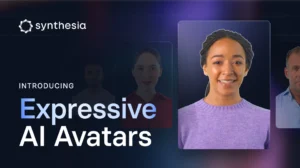
The money matters too. The 2025 funding round gave Synthesia a war chest to improve avatar realism, voice naturalness, and enterprise features like access control and compliance workflows. It also funded partnerships, including a licensing deal with Shutterstock to improve avatar expressions and workplace realism by using licensed footage to train models. That kind of partnership signals a maturing playbook: collaborate with creative industries, compensate rights holders, and build product features that enterprises will pay for. It is a direct rebuttal to the early “train-on-everything” era of generative AI that left artists and unions worried about compensation.
Beyond the single company, the macro picture explains why investors lined up. Generative AI has driven an enormous spike in private AI investment and forced enterprises to reimagine workflows. Research and market reports in 2024 and 2025 show generative AI attracting tens of billions in private capital, and video is a fast-growing slice of the content market. Enterprises are moving use cases from pilots to production, and tools that deliver clear ROI are winning. Synthesia sits at that intersection, offering measurable savings and speed in a medium that still dominates attention.
Still, the road ahead will test the company. Competitors, from startups to big labs, are racing to build better, faster, cheaper synthetic media. Regulatory scrutiny over likeness rights and political misuse is intensifying across Europe and beyond. And there are philosophical questions. What happens to human performers, to small production houses, to consent, when digital doubles are affordable and ubiquitous? Synthesia’s answer has been incremental: focus on enterprise use, build ethical frameworks, and push features that make misuse harder. Whether that is enough will shape not just the company but public policy and industry norms.
At its heart, Synthesia offers a practical lesson about how AI moves from demo to discipline. The first wave is always the magic trick, the demo that makes heads turn. The second wave is when companies obsess over compliance, margins, and repeatable workflows. The third wave is when that technology becomes part of an organisation’s operating rhythm. Synthesia is attempting that third wave now, translating AI novelty into operational muscle for global enterprises.

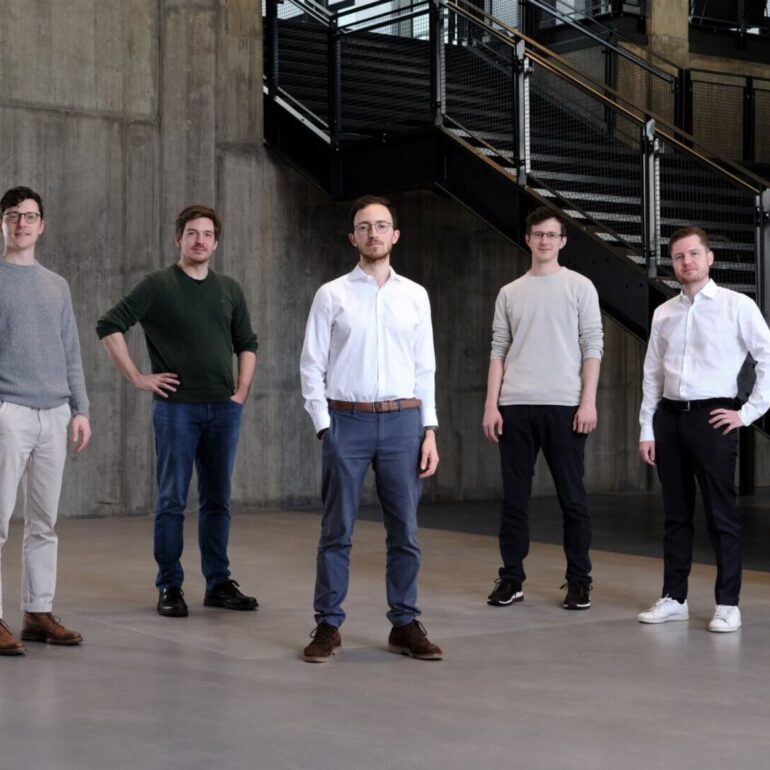
If you ask Victor Riparbelli, the CEO and co-founder, the mission is straightforward. Make video creation as accessible as writing an email, but make it responsible. The founders’ academic roots, in UCL and Munich, combined with entrepreneurial grit, helped them navigate both the technical and the ethical maze. Investors bet that this mix of credibility, product-market fit, and market timing can turn a remarkable tool into a durable business.
When AI changes an industry, the impact is both blunt and subtle. Some jobs will be compressed, others redesigned, and a new set of creative roles will emerge around prompt design, localisation, and governance. For now, the clearer story is about productivity. For communications teams that once treated video as a luxury, AI has made it a frequent, iterative channel. That may be the real revolution. Not synthetic people replacing real ones, but companies finally speaking to global audiences with speed and empathy, and with metrics to prove it.