
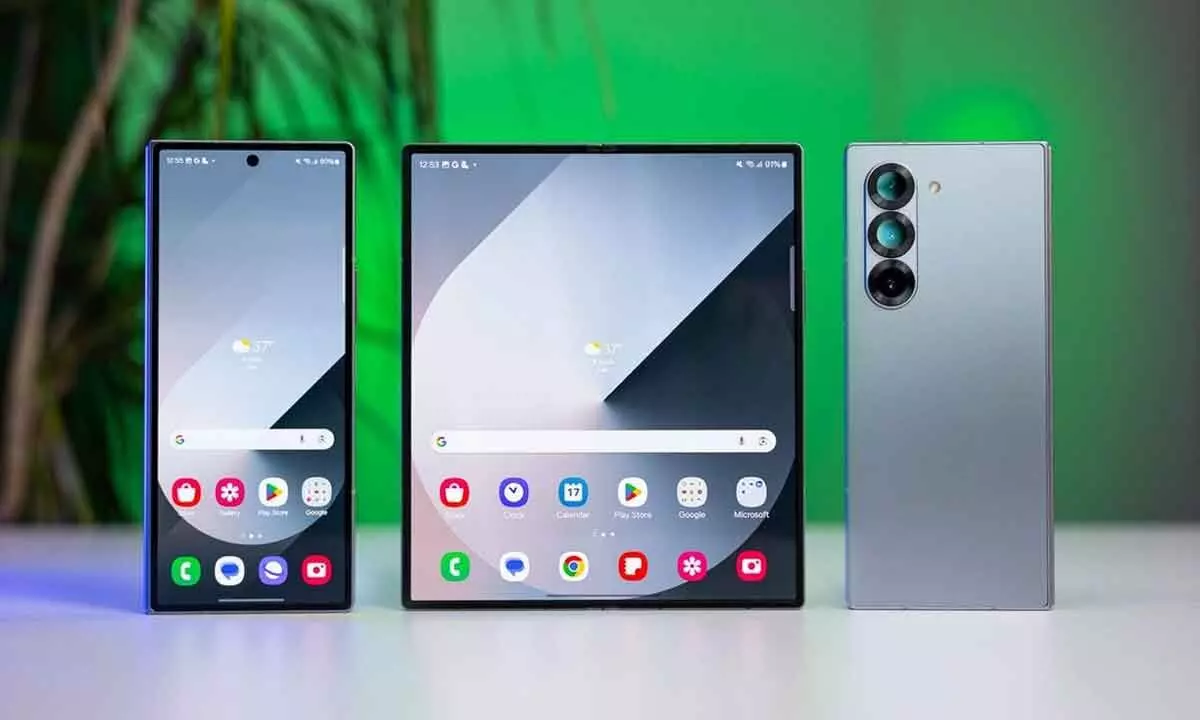
When Samsung pulled the curtain back in July at its Galaxy Unpacked event, it did something simple and risky at the same time. The company did not just refresh a handset. It doubled down on a bet that has been quietly reshaping the smartphone business, fold by fold: premium devices where hardware meets generous, built-in AI. The Galaxy Z Fold7 is the headline act, a thinner, lighter, and oddly familiar take on what a phone can be, but the story goes beyond the gadget. It is about design discipline, partnerships, and a larger industry trying to square premium hardware with the AI pivot.
At first glance, the Fold7 is an exercise in restraint. Samsung shaved bulk across the body, now measuring a mere 4.2 millimetres when unfolded and weighing 215 grams. That is not vanity, it is strategy. The company knows the biggest friction point for foldables is ergonomics. Make them feel like a normal phone and more people will consider them. Samsung also gave the Fold7 a 200-megapixel main camera, the same ultra-dense sensor it used on flagship S series models, and paired it with the company’s ProVisual Engine for on-device image processing. For buyers, the message was clear: this is a no-compromise phone for people who want a laptop-lite experience and flagship imaging in one package.

But the more interesting pivot is software. The Fold7 ships with One UI 8, Samsung’s most explicitly AI-led interface yet. The new UI treats large screens differently, scaling up multimodal agents to work across windows and apps. And Samsung is leaning on partners for that intelligence, notably Google’s Gemini, to offer assistant features that can summon context across apps. That is an important point. In an era when companies talk about owning the AI stack, the phone maker chose integration over isolation. The Fold7 is meant to be a showcase for an ecosystem that mixes Samsung’s hardware smarts with Google’s foundational models.
For consumers in markets, the timing mattered. Samsung reported brisk preorders in several regions and said initial stocks ran out in some cities, a sign that premium, aspirational devices still find buyers. That matters because buying a Fold is not just a product decision, it is an indicator of where consumers are putting disposable income and what features they value like cameras, multitasking, AI.

The Fold7 launch did not happen in a vacuum. The foldable category is on an upswing. Research houses saw foldable shipments up sharply through 2025, and analysts expect this niche to keep expanding as suppliers cut costs and competitors add variety. An improving supply chain and the willingness of Chinese rivals to experiment on price have nudged many buyers out of hesitation. Samsung still faces pressure in China where rivals have chipped away at share, but the company’s play is obvious, it is targeting premium buyers in the U.S., Europe, and key Asian markets with a distinctive product.
Why this matters to business readers is not only the product specs, but what they reveal about strategy. Samsung is investing in industrial design and hinge tech, because those are barriers to entry. It is also investing in partnerships and a software experience that turns a larger display into a productivity surface, not just a toy. That dual investment, in hardware and ecosystem, is expensive. It is also a bet that premium hardware can be a halo for services, like storage bundles and Galaxy AI subscriptions, which have higher margins than hardware alone. The pivot is subtle. Samsung is not abandoning any part of its business, it is trying to make premium phones justify their price with features that feel genuinely useful.

Still, there are hard questions. Foldables remain a sliver of the overall market, under two percent by many counts, and margins depend on continued willingness from buyers to pay for novelty plus utility. Component supply, particularly advanced chips and display panels, can become a bottleneck as demand rises. Competition is fierce — Chinese brands are improving foldable designs while keeping prices low. Samsung’s answer, at least this summer, was to raise the technical bar while making the device feel closer to a traditional phone in hand. If that convinces buyers who were waiting for the category to mature, Samsung wins. If competitors undercut on price without giving up too much on feel, the game changes. Reuters and industry analysts flagged exactly these tensions in post-launch coverage.
For worldwide startups, creatives, and road warriors, the Fold7 matters pragmatically. This phone is a single device that replaces a tablet for reviewing pages, a camera for quick shoots, and a laptop for draft edits. The AI features as a bonus, not the selling point. The real value was fewer devices to carry. That anecdote matters because it points to the tactile reasons people will pay for foldables. It is not about flexing. It is about replacing friction with a smarter tool.
It is a deliberate step in a market that is finally beginning to justify the investment. The Fold7 is an argument, in hardware and software, for a future where phones do more without asking users to carry more. For investors and product leaders, the lesson is clear. Win in premium hardware today and you can shape the software and services of tomorrow. Lose the premium halo and you compete on price alone. Samsung has chosen its lane, it has the muscle and the supply chains to sustain it, and for now, the market is listening.


