

When military and civil planners talk about aerial intelligence, they often mean satellites or manned aircraft. Quantum Systems makes a sharper case for a different tier: robust, AI-enabled drones designed for long endurance, modular payloads and quick deployment. The company is on the verge of a major funding round that could triple its valuation, because its product is more than a drone it is a platform for the new era of contested airspace.
The Platform Approach
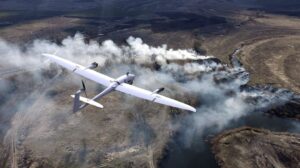
Quantum’s product lineup bridges high-end industrial tools and battlefield sensors. Vector AI, its latest platform, combines sensor fusion, predictive maintenance and modular payloads that can carry LiDAR, cameras or electronic warfare modules. The premise is simple: governments and enterprises need reliable aerial eyes that work even in GPS-denied or hostile zones. Quantum promises that mix of autonomy, scalability and resilience and investors are buying in.
The company is reportedly raising around €150 million, which could value it at nearly €3 billion. That number signals how strategically investors now view aerial intelligence.

From Mapping to Defence
Quantum began with commercial mapping and industrial inspection. But rising demand for resilient reconnaissance fueled by conflicts and the rush to protect infrastructure pushed it toward defence-grade systems. The pivot wasn’t cosmetic. It required new supply chains, export compliance and security clearances. The company spent the last two years building those foundations, and investors rewarded the shift with a large growth round. Now, they seem ready to double down.

Why Investors Are Watching
Three reasons explain the attention.
1. Hardware maturity. Drones are becoming modular and software-defined. Vector AI proves Quantum can integrate advanced sensors without compromising weight or endurance.
2. Expanding markets. Border security, critical infrastructure monitoring and counter-drone defence are all growing sectors. Quantum’s new Jaeger interceptor adds another layer of opportunity.
3. Global supply strategy. By setting up regional partnerships and production units, Quantum reduces dependence on single-country supply chains and eases procurement approvals.

The Challenges Ahead
Scaling a defence company is expensive and politically complex. A €150 million round will expand production and R&D, but it will also invite scrutiny. Drones designed to intercept others raise ethical and regulatory concerns, especially near civilian zones. Germany has already tightened counter-UAS safety rules. Quantum’s challenge is to deliver capability while maintaining strict compliance and transparent engagement protocols.

The Human Core
Quantum’s leadership team has deep roots in flight systems and defence sales, giving it credibility with national security buyers. That reputation also raises expectations. Customers demand rigorous testing, reliability and support. For Quantum, the next milestones are clear successful product deliveries, verified field performance and long-term contracts that prove staying power.
The Relevance
The world’s growing investment in aerial intelligence and counter-drone systems makes Quantum’s model highly relevant. Local partnerships could ease technology transfer and create manufacturing jobs. The larger lesson is industrial: governments prefer suppliers that can scale, localise and operate responsibly. Quantum is building that credibility step by step.
The Bigger Picture
Capital flowing into defence hardware reflects both promise and pressure. Opportunity lies in rising budgets, but risk comes from shifting geopolitics and scrutiny over safety. For Quantum, the real test is proving that defence innovation can scale responsibly. If it succeeds, it won’t just sell drones it will define how modern nations see the skies.