A Quiet Launch With Big Expectations
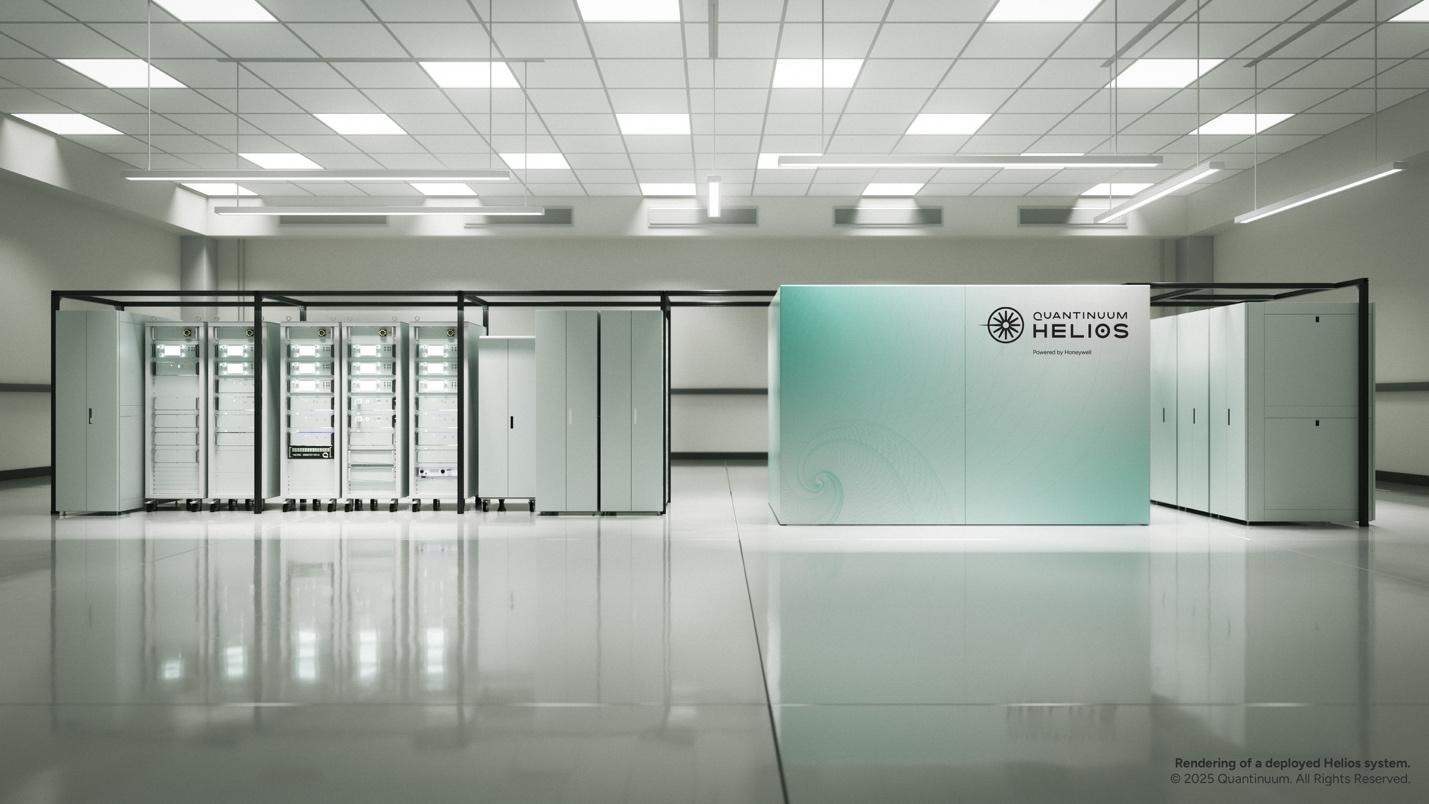
On 5 November 2025, Quantinuum launched its new quantum computer, Helios. The event looked simple, but the message was loud. Top global companies, including Amgen, BMW Group, JPMorgan Chase and SoftBank, signed up as early users. These are not trial customers. They deal with tough problems in health care, cars and finance. So their interest alone shows how serious this launch is.

Why Helios Stands Out
Quantum computers usually struggle because they make too many errors. Helios tackles that issue directly. It comes with 98 fully connected qubits that work with very high accuracy. Single-qubit operations are above 99.99 percent and two-qubit operations cross 99.9 percent. In simple words, the computer makes far fewer mistakes. That helps developers run tougher tasks without getting stuck in repeated errors.
Quantinuum calls Helios the most accurate commercial quantum system in the world. The company has also built software tools that feel friendly for mainstream developers. One example is Guppy, a Python-based programming language. It lets developers write regular and quantum code together. This makes quantum computing feel less like a lab experiment and more like everyday programming.

Real Problems, Real Companies
The big question in quantum tech has always been simple: can it solve real industrial problems? Helios gives a practical answer.
For Amgen, it may help model new medicines faster. For BMW, it can support research on lighter and stronger car materials. For JPMorgan Chase, it can improve large financial models used for risk and investment decisions. These are not far-future ideas. They are problems companies face today.

A Shift From Hype to Practical Use
For years, quantum companies competed over big numbers and theoretical breakthroughs. Helios changes the tone. It focuses on reliability and hybrid workflows, where classical and quantum systems work together. This is similar to how cloud computing slowly moved from a niche concept to a daily business tool.
Quantinuum also talks about “generative quantum AI,” a new direction where quantum hardware is used to model chemicals and complex data patterns. The term sounds futuristic, but the steps behind it are grounded in engineering discipline, such as cleaner qubits and fewer errors.

Still Early, But A Clear Step Forward
Quantum computers are still costly and need more logical qubits to unlock full advantage. So the industry is far from mature. But Helios marks a meaningful milestone. It is accurate enough for major companies to run real work, not only experiments. It is also available through cloud and on-premise setups, placing quantum hardware closer to enterprise IT systems.
What It Means For Markets
Countries which are pushing quantum research, can learn from Helios. The next important phase will be detailed case studies. If customers show time and cost savings, more industries will join. The coming year will reveal whether Helios becomes a long-term platform or remains a headline moment.
For now, it shows something simple yet powerful. Quantum computing is slowly leaving the “future tech” box and entering the world of real business tools. Helios is not a magic machine. But it might be the first one that can actually change how industries solve their hardest problems.