
Early Life, Early Clarity
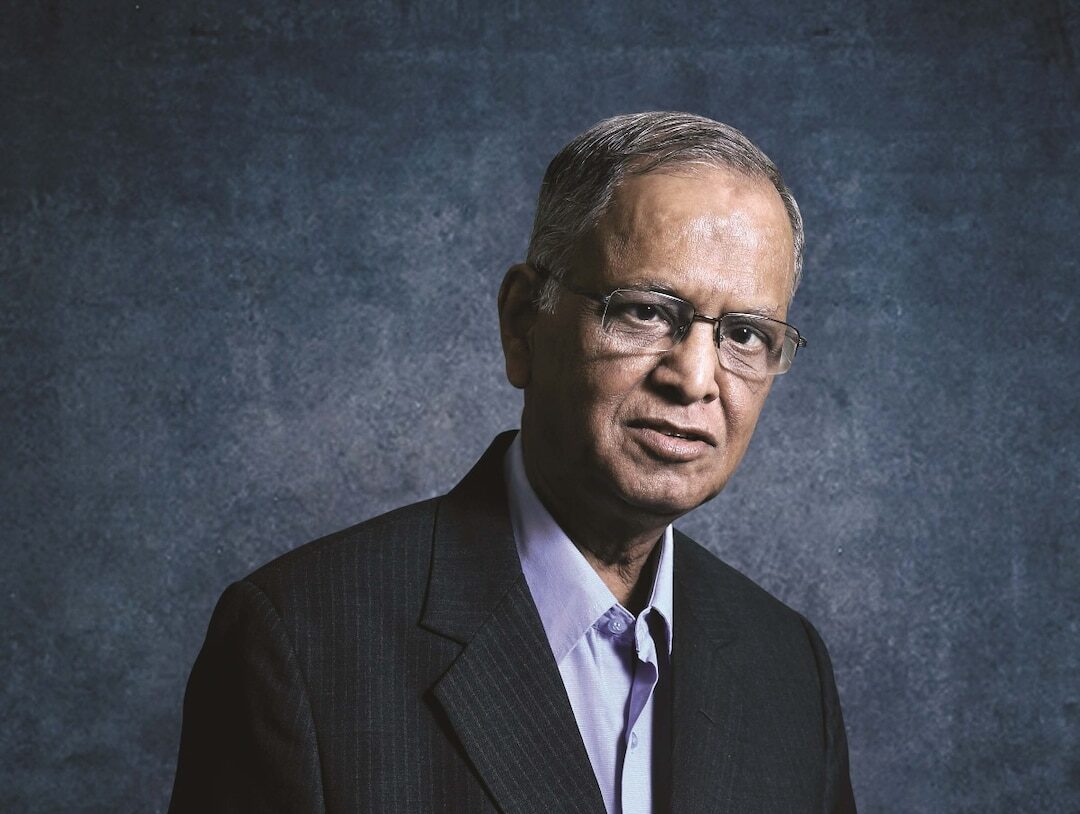
N. R. Narayana Murthy was born in 1946 in Sidlaghatta, a small town in Karnataka. He grew up in a modest environment, studied engineering and began his career as a systems programmer. He was skilled, comfortable and on a predictable path. Yet he felt a pull towards something bigger. He wanted to build, not just code. That spark shaped the rest of his story.
Seven People, One Apartment, No Guarantees
In 1981, Murthy took the leap into entrepreneurship with six colleagues. The seed capital was around Rs 10,000, provided by his wife Sudha Murty. They operated out of a small apartment, with almost no infrastructure and very limited resources. India in the early 1980s was not known for outsourcing or software exports. The world did not yet trust Indian tech capabilities and the country’s systems barely supported fledgling startups.
But Murthy believed India could deliver world-class technology services. He pushed Infosys towards a global delivery model long before it became industry vocabulary. The idea was simple but bold: build high-quality software in India and serve clients in the US and Europe, working across time zones and geographies.
Creating the Blueprint for India’s Tech Industry
The global delivery model transformed Infosys and eventually transformed Indian IT itself. Offshore development, onsite consulting and seamless coordination became the standard. What started as a survival strategy soon became India’s biggest export strength. Thousands of companies later adopted the model. It built jobs, confidence and a new economic identity for the country.
The NASDAQ Moment That Changed Everything
A major turning point came in 1999 when Infosys listed on the NASDAQ. It was the first Indian company to do so. The listing gave Infosys international visibility and signalled something bigger: Indian tech was no longer a back-office resource. It was a global player.
Investors took India seriously. Young engineers saw a new future. The world’s biggest companies began trusting Indian firms with critical technology work. The listing became a moment of pride, both for Infosys and for India’s growing tech community.

Leadership Built on Trust and Transparency
Murthy’s leadership style stood out in an era when corporate governance was not deeply emphasised in India. He built a culture where transparency, integrity and fairness were non-negotiable. One of his most impactful decisions was giving employees meaningful equity. It made thousands of Infosys employees genuinely invested in the company’s future.
Even when outsourcing began attracting criticism globally, Murthy positioned Infosys as a premium services company focused on trust, not low-cost labour. This clarity elevated the brand and created long-term client relationships.
Lessons for Today’s Digital and AI Era
As the world shifts towards AI, cloud, automation and remote-first work, Murthy’s legacy feels even more relevant. His journey offers clear takeaways for modern entrepreneurs and founders:
Build trust inside your company and with your customers.
Invest deeply in people and skill development.
Start with a global mindset, even if your resources are small.
Values are not a soft choice. They are a strategic advantage.
Murthy did not simply ride a wave. He helped create an entire market, and in doing so, he changed India’s economic story.
A Legacy Larger Than a Company
Infosys grew into one of India’s most respected IT giants. But Murthy’s impact goes beyond a brand name. He showed that world-class companies can grow out of small towns, minimal capital and sheer conviction. His work shaped careers, inspired new entrepreneurs and repositioned India on the global technology map.
He proved that ambition paired with integrity can build institutions that last.