
Mary Barra never planned to become the most powerful CEO in the global auto industry. She just wanted to build things, fix things, and make them work better, whether it was a car part, a factory line, or a legacy company stuck in old habits. Today, she runs General Motors, steering it into an era dominated by EVs, software-driven cars, and AI-led manufacturing. Her story isn’t only about breaking the glass ceiling. It’s about rewriting what leadership looks like in one of the hardest industries to disrupt.

The Girl Who Loved the Shop Floor
- Barra grew up in Detroit, where the auto business isn’t just an industry, it’s dinner-table conversation. Her father, Ray, worked at a GM die plant. He sometimes took young Mary to the workspace, not for some dramatic motivational moment, but just for life. The smell of metal, the noise of stamping presses, and the discipline of real production imprinted early.
At 18, she joined GM as a co-op student, earning money by inspecting fenders and hoods while studying electrical engineering at university. No fancy office pipeline. No instant accolades. She literally touched the cars. That’s where her confidence came from, the ground truth of making things.

People often romanticise growing up around cars. But let’s keep it real. Detroit was facing layoffs, strikes, and slowdowns, and the uncertainty of the auto world was part of her emotional landscape. It taught her something crucial: stability in manufacturing is built, never assumed.
After engineering, she moved to studying business. GM even sponsored her MBA. But what’s interesting isn’t the sponsorship. It’s the fact that she returned to the same company after learning, not to chase comfort, but to fix it from the inside.
One early manager at GM recalls how Mary would always show up early for factory issues before anyone else, and say it plainly, “Tell me the problem, I’ll work backwards.” No ego. No show. That’s her vibe from Day 1.

Finding Her Seat in a Man’s Industry
Climbing GM wasn’t smooth. She was often the only woman in rooms that talked horsepower, margins, and supply chain wars without a single filter. Some colleagues admit they initially saw her as too straightforward. But that became her strength later. Auto companies suffered for decades from overdressed language and undercooked clarity. Barra reversed that script.
In 2013, she became CEO, the first woman to lead a major global automaker. Her appointment made headlines. But the real storyline was waiting. The business challenges that followed were way bigger than any press release could cover.

GM Hard Reset: A CEO in Full Execution Mode
When Barra stepped in, GM needed more than a leader. It needed a system reboot.
Crisis 1: The Scale of Accountability
In her first year, she faced the ignition switch crisis, tied to safety issues across millions of cars. Most CEOs hide behind legal teams. Barra did something different. She testified publicly, admitted failures internally, fired leaders involved, and built new safety governance from scratch. The move was high risk, shareholders were sweating, lawyers were warning, and the media pressure was ruthless. But founders reading this know the rule, credibility > defence, always.
Takeaway for entrepreneurs: If your product fails at scale, don’t bury it under PR. Front-run accountability. The brand damage of honesty is temporary. The damage of cover-ups lasts for decades.
Manufacturing and Culture: “If It’s Broken, It’s My Meeting”
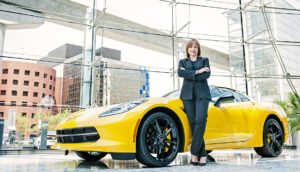
Barra is famous inside GM for saying, “Don’t tell me, show me. And if it’s broken, that meeting is mine.” When large companies hand factory issues to junior teams, it signals avoidance. When a CEO claims the problem meeting, it signals ownership.
During plant visits, she carried a small notebook, but not for aesthetic CEO cosplay. It’s where she tracked micro bottlenecks, edge-case supplier delays, weird quality reports, and any small inefficiency that could snowball. “If Mary were here, this would already be resolved.” That’s the benchmark she created.
Takeaway for founders: No matter the industry, if teams believe you’d solve the problem faster than them, it means your systems aren’t strong enough yet. Solve problems hard early in leadership. Then build teams that can solve problems independently later.

Electric Dreams, Grounded in Arithmetic
Turning Point: EV Over Everything
In 2017, when EVs were still side quests for most car giants, Barra internally declared that the company would move “all in” on electric and autonomous technology. Markets were doubtful. Traditional automakers were comparing battery supply to launch risks. Investors wanted incremental steps. Barra pushed µ-proof execution.
GM launched its own EV architecture and platform bet: Ultium, a modular battery tech plus car architecture play to scale across price segments and vehicle classes. It wasn’t just about a battery. It was about creating a consistent product DNA that could be stamped across the company’s entire portfolio.
Platform thinking scales when products differ massively. Think about your own business. If you are running fashion, fintech, or cloud kitchens, the secret to scale isn’t 100 products. It’s 1 architecture for 100 products.

Software Is the New Engine Oil
Auto companies used to earn margins just by selling cars. Today, margins come from what cars can do after sales. Barra pushed GM into subscription, cloud-connected services and software-led upgrades inside the car. The company rolled out new digital features under OnStar, Super Cruise, and software update pipelines.
The best product is the one that keeps earning after it’s sold. Not everyone builds software subscriptions. But everyone can build continued revenue streams, servicing, add-ons, education layers, data-led repeat sales, and loyalty loops.
GM even built strategic investments in AI, digitised manufacturing, and software R&D. The exact money scale may differ. But the entrepreneur logic remains.

Autonomous, AI and Long-Term R&D Bets
Barra’s autonomous and AI bet for GM lives through Cruise, GM’s autonomous car subsidiary launched years earlier, scaling R&D into a long-term moonshot for the company.
R&D-heavy industries feel intimidating. But all founders can learn the real takeaway: future markets are often built on long-term R&D, not short-term virality.

Supply Chain: Play the Long Game, But Build Local Shields
GM sources materials from global suppliers. But EV battery supply is a battlefield. Barra locked long-term supplier arrangements, backward integration exploration, and regional sourcing expansions.
Don’t depend fully on external ecosystems when you scale. Use global suppliers. But always build regional shields, or wherever your manufacturing stakes grow, don’t depend on only one region ever.

The Leadership Style Founders Can Learn From
Barra doesn’t play CEO like a distant commander. She plays like a systems architect and execution lead.
- Clarity over cosmetics
- Ownership over optics
- Platform design over random launches
- Long-term R&D paired with regional risk planning
She carries herself like someone who has nothing to prove, but everything to build, that’s how founders should feel when they scale to global rooms.
The Larger Lesson
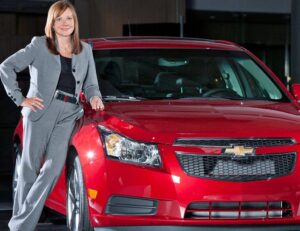
General Motors under Mary Barra is living proof that legacy companies can still lead future eras, if leaders challenge old assumptions, hold accountability early, work at the problem’s root, then build scalable architecture, software-led revenue loops and R&D pipelines that last.
Barra’s journey shows that innovation isn’t only a Silicon Valley thing. Sometimes it’s a Detroit CEO showing that platforms, software, safety credibility and long-term conviction can pull a 100+ year industry into an entirely new chapter.
Entrepreneurs reading this might never build cars. But every founder will face crises, markets that doubt you, teams that need structure, and moments that require bold financial bets and smarter systems later. Mary Barra solved for all that, with no fluff. Just clarity, grit and execution.