
From workshop to global logo
The story of Louis Vuitton begins with a craftsman who watched people move. In 1854, Louis Vuitton opened a small workshop in Paris and invented a flat-topped trunk that could be stacked, a practical innovation for a world that was just learning to travel by train and steamship. That small change, plus a relentless focus on craft, set the stage for a brand that turned luggage into status.

A sign that would stick
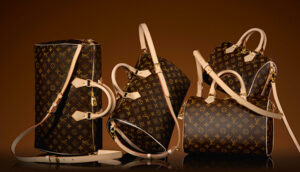
Imitation was a headache and an opportunity. To fight copycats, Georges Vuitton created the Monogram canvas in 1896, a pattern built from floral motifs and the LV letters. The monogram did more than protect design. It became a visual language you could broadcast across continents. It made a trunk, or a handbag, instantly legible in any airport or film set. That single graphic move created a discipline Louis Vuitton would repeat for a century: combine impeccable craft with a strong, simple identity.

Turning a house into a pillar of luxury
The late 20th century was a tug of war between heritage and scale. In 1987, Louis Vuitton merged with Moët Hennessy to become part of a wider luxury group, a turning point that turned a family-owned maison into part of a conglomerate capable of global reach. That structure gave the brand muscle to expand beyond trunks into leather goods, fashion, watches and jewellery. It also set the scene for one of the most consequential business figures in modern luxury.

The Arnault era, and the strategy of accumulation
Bernard Arnault’s rise in the late 1980s and early 1990s changed the game. He made acquisitions and put designers at the core, treating brands as long-term cultural bets. Under his leadership, Louis Vuitton found a rhythm: protect the core product, invest in culture, and partner with creative outsiders. That model, which shaped LVMH’s identity, also turned the group into the biggest player in luxury. Today the house sits inside a group whose revenues have run into the tens of billions, proof that luxury can be both artisanal and industrial.

Collaborations, culture, commerce
If Louis Vuitton has a modern playbook it is this: collaborate with artists to stay culturally relevant. From Marc Jacobs’ playful reinventions to Takashi Murakami’s multicolour monogram, and later Virgil Abloh’s high-fashion streetwear experiments, these partnerships did more than sell bags. They rewired the brand for a younger audience and made Vuitton a platform where art and commerce talk to each other. Those creative alliances have been risky, but they kept the brand visible and desirable.
Tension and trade-offs
That visibility comes with trade-offs. A global brand must guard against dilution. Louis Vuitton has gone to court repeatedly to fight counterfeits and protect its monogram, sometimes attracting public criticism when that policing clashed with free expression. And as the brand moved into ready-to-wear and watches, it had to keep the core promise of superior materials, factory know-how, and service intact. The challenge has been to expand without making the name ordinary.

Why Louis Vuitton still matters
The brand feels familiar because it operates like a patient machine. It launches a new leather shape, reimagines an icon with an artist, opens a flagship, then measures demand, and repeats. During global shocks and changing consumer tastes, this steady playbook has helped the maison keep growth and desirability aligned. LVMH’s recent financials show how resilience built on brand equity and scale can translate into massive numbers.

A human side to a global logo
Beyond numbers and logos, Louis Vuitton is about people. Craftsmen who spend weeks finishing a single bag, creative directors who risk their reputations on a collection, and customers who pass a Speedy or Keepall down generations. The brand’s personality lives in those small exchanges, not in quarterly reports. That human thread is why a suitcase from 1854 still speaks to someone boarding a flight in 2025.

The next chapter
Luxury is shifting; sustainability, younger buyers and digital culture are reshaping value. Louis Vuitton’s challenge now is classic and modern at once, preserving craft while adapting to new expectations. If the past teaches anything, it is that the house learned to travel well. The question now is which roads it chooses next.