
There was a time when layoffs came with shame. Press releases were careful. Language was soft. Executives looked uncomfortable.
That time is over.
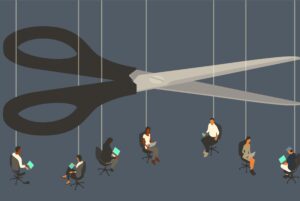
In today’s business atmosphere, layoffs are no longer a last resort. They are a routine lever. Used early. Used often. Sometimes even pre-emptively.
And the world has quietly accepted it.

Layoffs Are No Longer a Signal of Failure
Earlier, job cuts meant something went wrong. Bad strategy. Falling demand. Poor leadership.
Now, layoffs often happen when companies are doing fine.
Stock prices rise after announcements. Analysts praise “discipline”. Investors reward “cost rationalisation”. Markets have decided that fewer people often means better margins.
This shift matters. It changes how businesses behave and how workers interpret stability.
A company can be profitable, growing, and still cutting jobs. That paradox is now normal.

From Crisis Response to Operating Strategy
Post-pandemic volatility rewired decision-making.
Supply chains broke. Demand swung wildly. Interest rates jumped. Capital got expensive. Businesses learned that flexibility beats loyalty.
So instead of hoarding talent for the long term, companies started optimising for the quarter.
Layoffs became part of regular planning cycles. Not reactive, but strategic.
Trim now, rehire later.
Cut deep, move fast.
Keep teams “lean”.
This isn’t cruelty. It’s a new risk model.

The Language Changed for a Reason
Notice how layoffs are framed today.
“Restructuring”
“Rebalancing”
“Efficiency drive”
“Organisational reset”
These phrases aren’t accidental. They distance leadership from the human impact and reframe job losses as smart management.
The softer the language, the harder the decision usually is.
Over time, repetition desensitises everyone. Employees stop expecting permanence. Employers stop explaining.
Why White-Collar Roles Feel Especially Fragile
This cycle hits white-collar workers harder than before.
Automation, AI tools, and process optimisation have made many corporate roles easier to measure and easier to consolidate. Middle layers are shrinking. Entry-level pipelines are thinner.
If output can be maintained with fewer people, headcount becomes negotiable.
This is why job security feels weaker even in “good” companies. Stability is no longer tied to performance alone. It’s tied to efficiency math.

The Psychological Cost Businesses Underestimate
Layoffs don’t just remove people. They change behaviour.
Remaining employees become cautious. Risk-taking drops. Loyalty becomes transactional. Long-term thinking weakens.
People stop asking “How do I grow here?” and start asking “How long will this last?”
That mindset shift doesn’t show up immediately on balance sheets. But it shows up in culture, innovation, and trust.
Fear is efficient in the short term. Expensive in the long term.

Governments and Labour Laws Are Playing Catch-Up
Most labour frameworks were built for a different era. One where employment was relatively stable and layoffs were exceptional.
Today’s environment moves faster than regulation.
Mass layoffs across borders, contractor-heavy workforces, and role eliminations disguised as “role redesign” sit in grey zones legally and ethically.
Policymakers are watching, but reacting slowly. By the time rules adjust, business behaviour has already moved on.

Workers Are Adapting, Quietly
The biggest change isn’t corporate. It’s personal.
People are hedging. Side incomes. Skill stacking. Shorter tenures. Emotional detachment from employers.
The idea of a single long-term employer feels outdated for many professionals, not by choice, but by observation.
Trust shifted from institutions to self-reliance.

What This Says About the Business Climate
Layoffs becoming routine tells us something bigger.
The global business atmosphere prioritises agility over stability, margins over morale, optionality over obligation.
This doesn’t mean businesses are evil. It means the system rewards speed and efficiency more than continuity.
And systems shape behaviour.

The Bigger Picture
We’re not in an era of mass unemployment. We’re in an era of permanent uncertainty.
Jobs exist. Careers exist. But guarantees don’t.
Layoffs without apology are a symptom of a world that values flexibility above all else. For companies, it’s a survival strategy. For workers, it’s a reality to navigate.
The social contract between employer and employee hasn’t collapsed.
It’s been rewritten.
Quietly.
Permanently.