
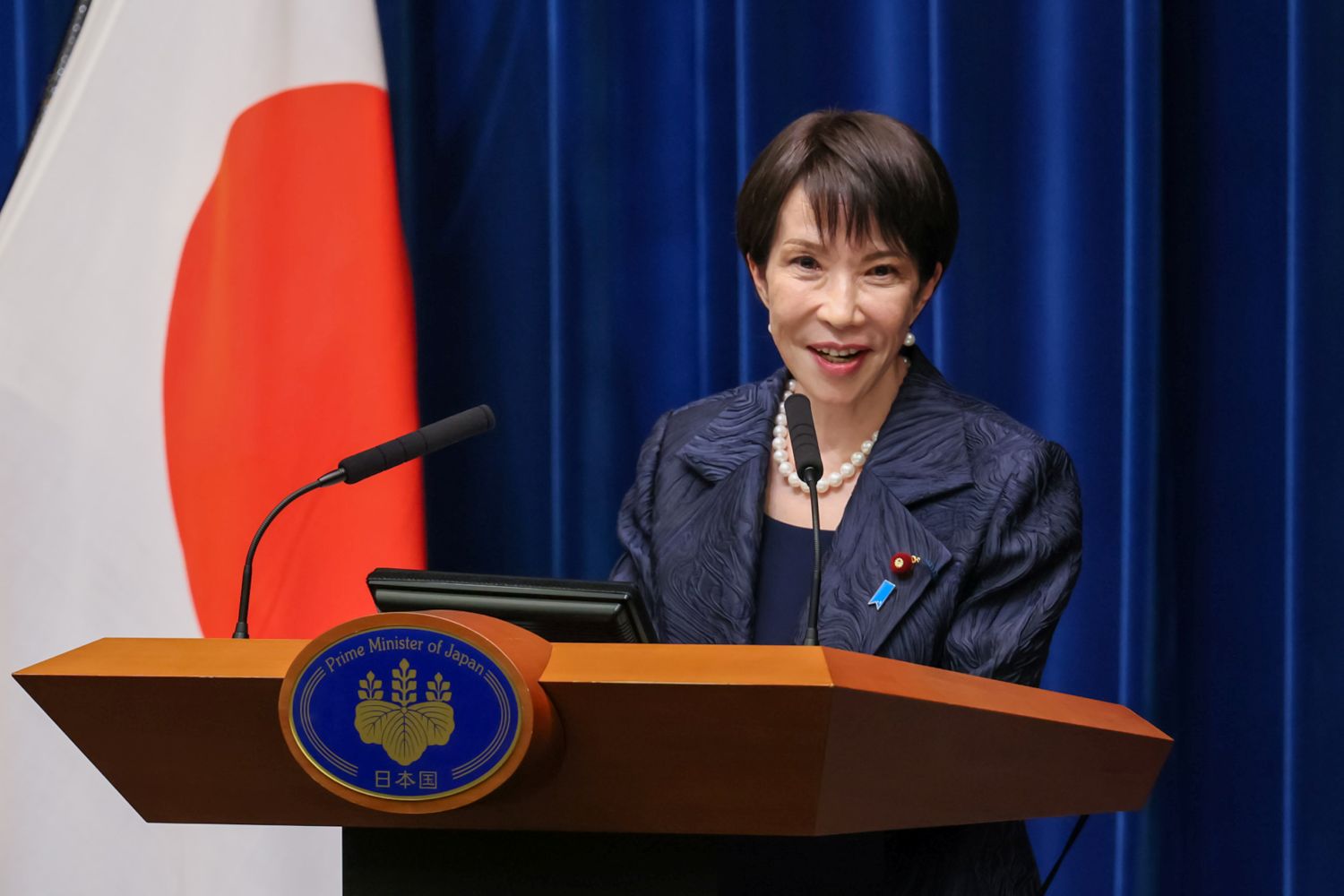
Japan’s cabinet approved a stimulus package totaling 21.3 trillion yen ($135.5 billion) on Friday, as Prime Minister Sanae Takaichi seeks to boost the country’s slowing economy and offer support to inflation-hit consumers.
Public broadcaster NHK reported that the package was based on three pillars: addressing rising prices, achieving a strong economy, and strengthening defense and diplomatic capabilities, according to a Google translation. This stimulus package is the largest since the Covid-19 pandemic, according to local media.

The cabinet also said it would expand local government grants, as well as provide subsidies for electricity and gas bills. The support measures will kick in January, amounting to about 7,000 yen for a standard household over a three-month period, according to the NHK report. Taxes on gasoline will be eliminated.
Japan also plans to establish a 10-year fund to enhance its shipbuilding capabilities, and enact measures to raise defense spending to 2% of its gross domestic product by fiscal year 2027. The government said it will “swiftly compile” a supplementary budget bill to fund these measures, and plans to pass it by year-end with help from opposition parties.
The ruling Liberal Democratic Party currently is a minority government, but is now allied with the Japan Innovation Party. Together they hold 231 seats, two short of a majority in Japan’s 465-seat Lower House. Takaichi told reporters that the government will use its revenue to fund the package, and any shortfall would be covered via issuing government bonds.
She said that the amount of government bonds would likely be lower than last year’s 42.1 trillion yen issued after the supplementary budget, emphasizing that full consideration had been given to fiscal sustainability. Jesper Koll, expert director at Tokyo-based financial services firm Monex Group, told that Takaichi’s move will spook Japanese government bond markets.
Japanese bonds have been seeing a sell-off, with yield on the benchmark 10-year JGBs hitting its highest since 2008 on Thursday, at 1.817%. It was down 3 basis points at 1.785% on Friday. Koll said while Takaichi had delivered on her election promise with a larger-than-expected budget, the focus seems to be on short-term and one-off populism, rather than on incentives for positive structural change.