The Bellhop Who Built a Legacy
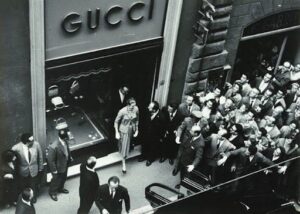
Florence, 1921. Guccio Gucci, a former Savoy bellhop who had learned what well-travelled clients wanted, opened a little leather and luggage workshop on Via della Vigna Nuova. That luggage shop grew into an identity, one built on craftsmanship, travel and a certain equestrian elegance, from the horsebit to the bamboo-handled bag born in 1947. Those early objects carry more than style. They carry a lesson Gucci keeps relearning, that product and story together make a durable cultural claim.

A Beautiful Contradiction
If you want a neat portrait of modern luxury, Gucci provides a useful mess of contradictions. It is at once heritage and hyper-contemporary, artisanal and global, wildly profitable and periodically shaky. The century that followed Guccio’s shop has been marked by family drama, global expansion, celebrity moments and creative gambles. One small story tells you why the brand endures. In the late 1940s leather was scarce after the war, so Gucci’s Florentine artisans heated bamboo over a flame to shape the now-iconic bamboo handle. A practical fix became an icon, and the bag lived on. That tension between necessity and invention is the brand’s engine.

The Reinvention That Changed Everything
The modern Gucci story that most executives point to starts in 2015. The house looked tired, sales were plateauing, and the sector was changing faster than most legacy houses were ready to admit. Enter Marco Bizzarri, the CEO who leaned hard on experience and culture, and Alessandro Michele, the creative director who reimagined Gucci as a maximalist playground for a younger, internet-native audience. Together they did what many brands dream of, they rewired desirability. Gucci grew fast, tripling and then quadrupling in some periods, and in doing so remade how legacy luxury could talk to Gen Z and millennials. It was a reinvention powered by bold design choices, savvy digital storytelling and a sense that Gucci could be both irreverent and sartorially serious.
When Momentum Falters
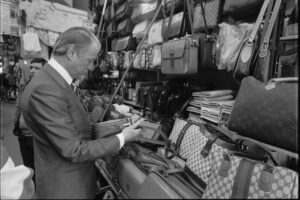
That rise taught the industry another lesson. Reinvention works, but it can also create dependencies. Consumers who fall in love with one aesthetic can move on, markets shift, and the macro environment matters. Since 2022, Gucci has faced a rough patch. Rapid leadership changes, shifts in creative direction and a slowdown in key markets have exposed the limits of momentum. In early 2024 and into 2025 the house tried a course correction under Sabato De Sarno, a designer who traded Alessandro Michele’s maximalism for a cleaner, more wearable wardrobe. The press called it a pragmatic reset. Sales did not immediately respond, and that fragility became painfully public when De Sarno left after less than two years, a departure closely tied to a sharp sales slump and wider questions about positioning.
A Leadership Reset
That period of turbulence also became a rare public lesson in luxury governance. Gucci is Kering’s crown jewel, and when the crown flinched, Kering moved decisively. In 2024 and 2025 the group reshuffled executives, appointed new leadership at Gucci, and signalled that the brand would be steadied from both a creative and a business angle. Francesca Bellettini’s appointment as CEO of Gucci, after a long and successful run at Saint Laurent, is the clearest sign that Kering wants a hard reboot that blends creative boldness with disciplined commercial rigour. The new leadership faces a tricky brief, to restore lost momentum without turning the clock back.
Craft, Culture and Commerce
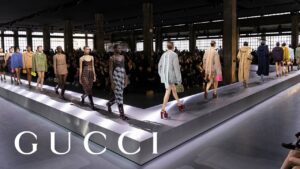
What does this mean on the ground, for design and the shopfloor? Gucci’s story shows that luxury is now a live experiment in cultural relevance. The house must manage three things at once. First, craft, the thing consumers still pay a premium for. Second, cultural resonance, the ability to feel necessary in social media conversation and pop culture. Third, commercial discipline, the pricing, distribution and product mix that keeps margins healthy. Gucci has alternated emphasis among these levers many times. The bamboo bag anecdote is not just quaint heritage, it is a reminder that craft can be reinvented into demand when paired with narrative and timing.
The People Behind the Brand
There are vivid, human moments in Gucci’s corporate biography. Marco Bizzarri’s partnership with Alessandro Michele reads like a creative love story in business terms. Their tenure attracted a new cohort of designers, stylists and shoppers who saw fashion as identity architecture, not only ornament. Then there is the humbling of a global house, when even Gucci’s scale could not immunise it from currency swings, Chinese market slowdowns and changing consumer spend patterns. These are not abstract risks. They translate into missed sales targets, store closures and admission of error in strategy memos. For executives, those are lonely, costly nights. For creative teams, they are tests of faith. For the artisans and store teams, they are pressures that trickle down to the day-to-day. Reporting from fashion press and business pages across 2024 and 2025 captured that strain, and also how fast leadership decisions followed.
The Road Ahead
So what comes next for Gucci, beyond the inevitable headlines about who will design what? The smart bet is pragmatic evolution, not revolution. The house needs to protect its artisanal soul while being sharper about where it shows up culturally, which price tiers it leans on, and how it manages inventory. The industry’s signal is clear. Consumers still want narrative and individuality, but they also want products that work in real life, and economies that can make luxury feel worth its price tag again. Gucci’s challenge is to be magnetic without being theatrical for the sake of it. It must be useful to the customer who is actually opening her wardrobe day to day. That is the tightrope.
The Enduring Lesson
If you step back, Gucci’s journey matters because it is a live case study in modern brand resilience. A century after Guccio hammered leather in Florence, the house still relies on the same axis, craftsmanship plus cultural relevance. The players change, the aesthetics change, the balance between show and sell shifts, but that original equation explains why fashion editors, investors and shoppers all still lean in when Gucci moves. The story is not finished. It probably will never be finished. That is the point. Brands that last are less about reaching perfection and more about weathering cycles and returning, again and again, to what made them essential in the first place.