
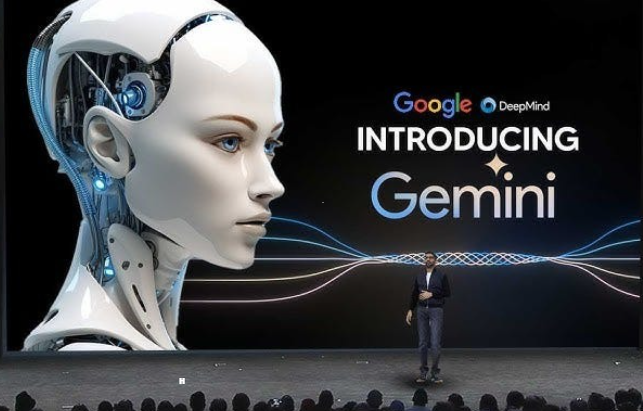
When Google introduced Gemini 2.5 Computer Use in October 2025, it did not look like a big flashy launch. There was no dramatic moment or big stage. It started with something simple, the everyday tasks we all do on our computers. Filling forms, clicking buttons, moving between apps. These small actions may look ordinary, but they take up hours of human time every week.
Google’s new tool promises to take over exactly these jobs, and that is why it feels like a quiet milestone.

What Exactly Did Google Launch
Gemini 2.5 Computer Use is an AI model that can understand screens and then act on them. You give it a screenshot and a clear goal, and it figures out what to click, type or scroll, very similar to how a human would operate a computer.
Developers can now build agents that can move through websites, fill forms, test apps and even work behind logins. Early tests show the model is more accurate and faster than older automation tools.
This gives businesses something they have been waiting for, an AI that can handle real digital work without breaking whenever a button moves or a website updates.

Why This Matters to Businesses
For many years enterprise automation had two extreme options.
One, spend a lot of money building API-based integrations.
Two, use robotic process automation tools that work only until a UI changes slightly.
This new approach sits in the middle. It is flexible like a human user, but still precise like software.
Teams are already trying it for customer support, software testing, onboarding workflows and repetitive website tasks.
For companies that rely heavily on web portals and legacy apps, this could save serious time and cost.

The Real Challenges Ahead
Even with all the excitement, challenges remain.
Training an AI to navigate every possible interface is tough. UIs differ by device, layout and language. Some screens carry sensitive information, which raises privacy and security concerns.
Google uses a feedback loop method, where the AI suggests an action, the system executes it, and then the AI studies the next screenshot. It keeps learning with every step.
Still, companies will need strong governance. Who gives the AI permission? What happens if it clicks the wrong button? How do you maintain audit trails? These questions cannot be ignored.
A Turning Point in the AI Industry
The launch came at a powerful moment. Investments in AI are rising fast. Chip makers, cloud companies and startups are all betting on “agentic AI” systems that can think and then act.
For Google, this moment takes Gemini beyond chat and reasoning into real-world action. For businesses, it offers automation without months of integration work. The real test now is adoption, can companies balance speed with safety.

Opportunity for Emerging Markets
In countries, where small and medium businesses still depend on complex government portals and mixed digital systems, this kind of AI could be a big boost.
Think of an export firm that needs to file ten different documents across different sites. Or a hospital that must update patient details in multiple systems. AI agents could do this work in minutes.
But the risks are just as real. If AI can control UIs, then rules, ethics and compliance need to mature quickly.

The Beginning of a Bigger Shift
Gemini 2.5 Computer Use is not the end, it is the start of a new chapter.
If businesses and regulators find the right balance, the computer tasks we do today will slowly shift from humans to digital agents.
The transition will not be perfect, but it will reshape how work gets done. And like many important changes, it started quietly, with something as simple as a click and a form.