

One of the most serious experiments in robotics today is not happening in a research lab. It is happening on factory floors and inside ordinary rooms built for people. The robot behind this shift is Figure 03, a humanoid robot developed by US startup Figure AI. Its goal is simple but bold: build a robot that can do everyday human work, safely, at scale and at a cost businesses can justify.
This is not a flashy demo story. It is a test of whether robotics is ready to become a mainstream labour platform.

How the idea took shape
Figure AI was founded in 2022 by Brett Adcock, an entrepreneur already known for building exciting companies. After working across recruitment tech and aviation, Adcock turned his attention to a harder problem. The world is running out of labour for repetitive, physical work, especially in factories, warehouses and logistics. Automation exists, but it is fragmented. Every robot does one narrow task. Human adaptability is still missing.
The early idea was risky. Instead of building task-specific machines, Figure decided to build a full humanoid robot, one that walks on two legs, uses hands, looks like a human and understands spoken language. Many robotics experts warned that this was too complex and too expensive.

The prototype, Figure 01, could walk and lift objects but struggled with balance, battery life and reliability. The hardware worked, but the intelligence was limited. Teaching robots new tasks took time and manual programming.
The real breakthrough came when the team shifted focus to software. Figure built its own AI model called Helix, designed to connect vision, language and physical action. With Helix, the robot could look at a scene, listen to a human instruction and figure out how to move its body to complete the task. It learned not just from code, but from watching human actions and simulated data.

Another key moment was taking the robot out of the lab. Figure partnered with BMW and placed pilots inside a live car manufacturing plant. The robots worked on repetitive tasks such as handling parts on the assembly line. Real-world deployment exposed failures quickly. Robots froze, made mistakes and needed constant tuning. But this pressure made the system better.
Those lessons fed into Figure 03. It is lighter, more energy efficient and built for mass production. Sensors in the hands improve grip. A softer outer shell improves safety around humans. Most importantly, the robot is designed to be manufactured at scale, not as a one-off machine.

What this humanoid means for builders and investors
At its core, Figure 03 combines three things.
First is the humanoid body. The robot is shaped like a human because the world is built for humans. Doors, stairs, tools and workstations already exist. A human-shaped robot can operate without redesigning entire environments.
Second is the AI brain. Helix works like a foundation model for physical work. Instead of programming each task, users can give simple instructions. Over time, the robot improves by learning from experience across many deployments.

Third is the business system around it. Figure is building factories, data pipelines and partnerships so that each robot improves the network. This turns robotics from a hardware sale into a long-term platform.
The strongest near-term demand is in manufacturing and warehouses. These spaces face labour shortages and high turnover. Robots can work long shifts and handle repetitive or unsafe tasks. Instead of selling robots outright, companies can offer robots as a service, charging monthly or per hour. This lowers adoption risk for customers.
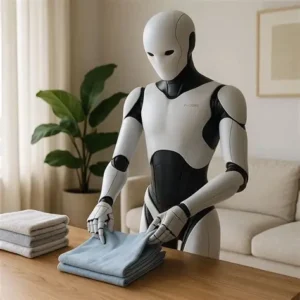
In the future, service industries could follow. Retail, hospitality and even home assistance are possible markets, though trust, safety and regulation will matter more there.
Competition is intense. Tesla is building its own humanoid robot. Other startups are focusing on logistics robots. Big tech companies are supplying core AI infrastructure. No single company has won yet.
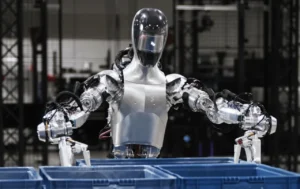
There are serious challenges. Robots still struggle in unpredictable environments. Integrating them into workflows takes time. Labour rules, safety standards and data privacy laws are still evolving.
The biggest lesson from Figure’s journey is focus. The company chose a hard problem but tied it to clear economics. It tested early in real workplaces, not just demos. It partnered aggressively and designed for scale from the start.
Figure 03 is not perfect. But it shows where robotics is going. The future of work may not be fully automated. It may be shared between humans and machines, working side by side. For builders and investors, that shift is already underway.