
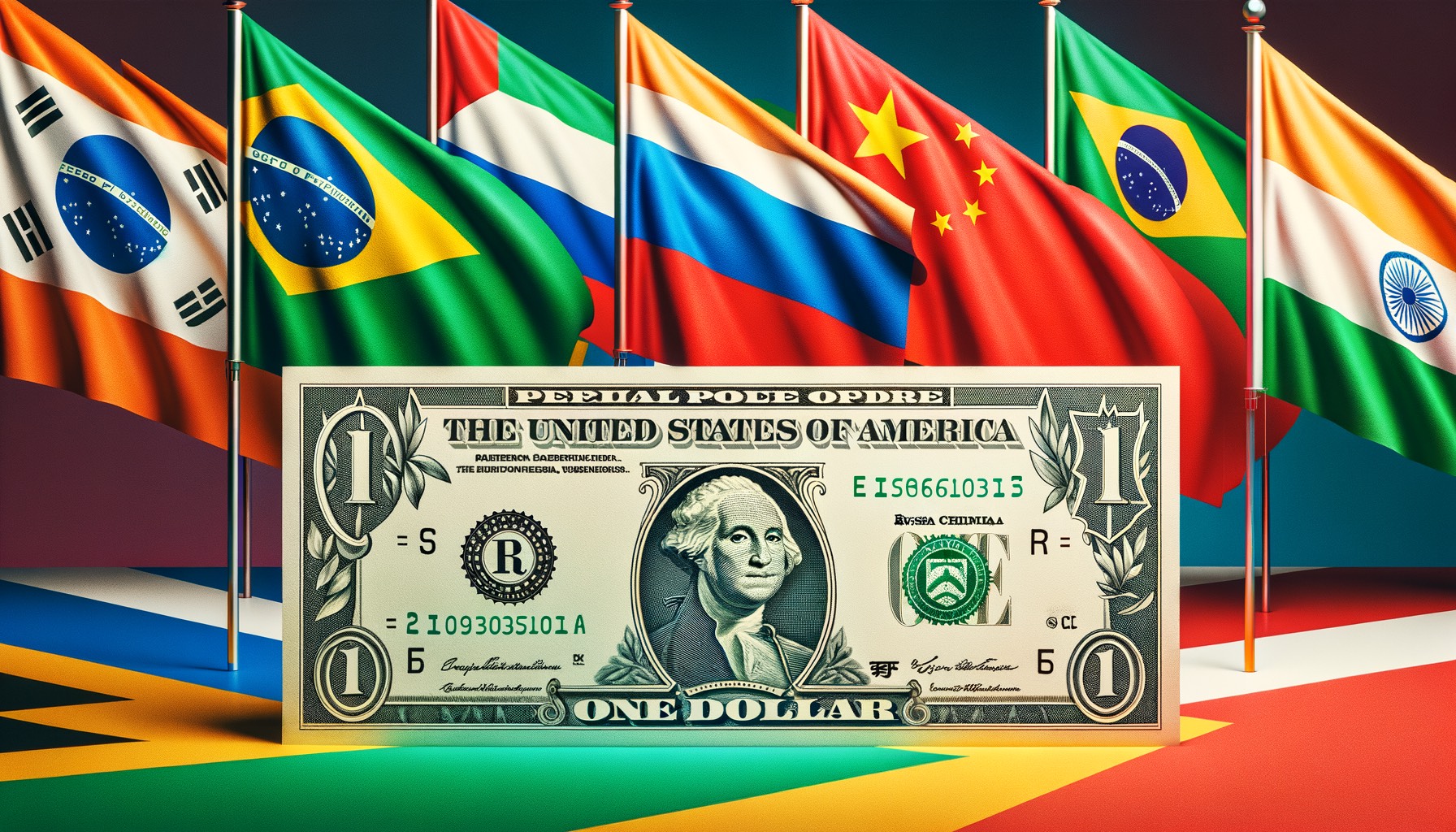
Global business in 2025 isn’t just about companies, it’s about currencies. The financial map is shifting from a world dominated by one reserve currency to a multi-pole monetary tug of war. At the center of this shift is the rising confidence of BRICS economies, ongoing de-dollarization efforts, and what it means for trade, investment, and the balance sheets of every business that works internationally.
The Dollar Era Isn’t Over, But The Monopoly Is
The US dollar is still the main act in global finance. It prices oil, benchmarks commodities, and underpins reserves held by institutions like the International Monetary Fund. But cracks are showing in its exclusivity.
BRICS countries are now pushing for alternatives in settlement systems so they’re not relying on dollar rails for every cross-border transaction. The bloc includes Brazil, Russia, South Africa, plus China and India. Their goal isn’t to erase the dollar, it’s to dilute its chokehold on global trade.
Between 2022-24 alone, multiple BRICS central banks increased reserves in local currencies, gold, and non-USD denominated assets via systems like CIPS, China’s yuan-based cross-border payment network.
When a monopoly currency loses even 5-10% of settlement primacy, it reshapes trade costs, hedging strategies, and investment decisions for decades.

Gold Is Back On The Spreadsheet
Central banks are romanticizing gold again, but this time it’s not nostalgia. It’s strategic finance. Central Bank of Russia aggressively stocked up gold reserves post-sanctions, while People’s Bank of China continued multi-year buying to hedge USD risk.
This new gold appetite is keeping global metal markets heated. Prices regularly flirt with all-time highs. For commodity traders and import-export firms, gold is becoming more volatile than ever, pushing many to hold it like a currency, not just an asset.
Gold isn’t just collateral any more. It’s liquidity insurance for economies dodging dollar dependency.

Local Currency Trade Is Becoming A Real Thing
Countries inside BRICS but also outside it are settling bilateral trade in local currencies to avoid USD exchange exposure. Russia and China scaled ruble-yuan settlements. India is trialing rupee settlement corridors with ASEAN and Middle Eastern trade partners. Brazil is expanding real-yuan agreements for agricultural exports.
This reduces forex fees and dollar acquisition dependency but increases currency pair risk. Experts are calling this phase “currency diversification of global trade”.
For companies: if you export steel, soybean, fertilizer, or tech services into BRICS-friendly markets, you will soon be negotiating contracts priced in non-USD currencies. It can reduce cost but demands stronger risk management.

Sanctions and Supply Chains Intersect With Currency Strategy
Currency shifts are also linked to geopolitics. Since 2023, US-led sanctions pushed Russia and parts of Africa and Latin America to trade without USD rails. Supply chain re-routes from protectionist policy made currency alternatives economically practical, not just ideological flexing.
Chinese manufacturing dominance in EV batteries, solar panels, and semiconductors, plus US re-industrialization policy like the CHIPS and Science Act, created a scenario where every supply chain decision from hardware to energy becomes a currency decision too.
Example: oil import deals between Russia and the United Arab Emirates have increased non-USD settlement ratios. Energy and manufacturing companies globally are watching closely because oil priced outside dollars is the biggest signal, trade power is currency power.

Emerging Economies Want Digital Settlement Sovereignty
Tech-enabled economies want autonomous payment rails. China has CIPS. India’s ecosystem proved through UPI that the world is ready for instant settlement systems, but localized. Multi-country fintech solutions like CBDCs are now rising.
Countries including the UAE, Russia, China, and parts of ASEAN are testing Central Bank Digital Currency frameworks to support local settlement faster than SWIFT rails, using sovereign digital rails instead of USD intermediation.
For cross-border companies: this means settlement tech is moving from banks to central banks, reducing processing time, but increasing compliance alignment demands.

The Business Impact: Real Not Academic
Here’s how this currency remix hits businesses operating globally:
1. Forex Costs May Drop, But Hedging Complexity Rises: Local currency contracts reduce dollar conversion but expose companies to pair volatility like ruble-yuan or rupee-dirham.
2. Treasury Teams Need To Expand Their Skills: Companies must now track 3-4 currencies + gold, not 1 USD benchmark.
3. Pricing Power Is More Fragmented: Commodities may be priced differently across regions as dollar dominance softens.
4. Contracts Need Currency Optionality Clauses: Future deals may demand multi-currency settlement flexibility.
5. Cash Flow Will Move Faster, But Rules Will Be Local: Sovereign rails speed up payments but require country-specific compliance.

2025 Business Mood In One Line
The global economy isn’t just globalizing, it’s regionalizing, even in money. The currency game today is no longer where cash lives. It’s which cash travels freely, cheaply, safely.
The winners of the next era won’t be chosen by office location, founder flex, or product hype. They’ll be chosen by how smart their money routes are, how ready they are for multi-currency contracts, and how early they adapt to a world where trade speaks more than one monetary language.