

In 2026, the global business conversation has shifted from “Should we invest in AI?” to “How fast can we scale it?” The gold rush is no longer about apps or chatbots. It is about infrastructure.
The real money is flowing into chips, data centres, cloud capacity, and energy.
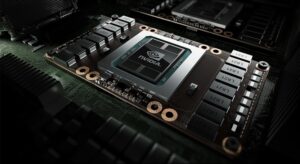
Companies like Nvidia have become central to this shift. Once known mainly to gamers and hardware engineers, Nvidia is now one of the most influential companies in global markets. Its graphics processing units power large language models, autonomous systems, drug discovery platforms, and financial analytics engines.
But Nvidia is just one layer of a much bigger transformation.
Cloud Giants Are Rewriting Their Playbook
Microsoft, Amazon, and Alphabet are investing billions to expand AI-ready cloud infrastructure. Data centres are being redesigned for high-density GPU clusters. Enterprise contracts now revolve around AI compute credits rather than traditional storage packages.
Cloud has moved from being a cost-optimization tool to a strategic weapon.
Governments are also stepping in. The United States, European Union, India, and several Gulf countries are funding semiconductor plants, sovereign AI models, and national data infrastructure. Technology is no longer just a corporate race. It is geopolitical strategy.

Energy Is the Hidden Variable
AI consumes enormous power. Training advanced models requires massive electricity loads, and inference at global scale adds continuous demand. This has triggered a surge of investment in renewable energy, grid modernization, and even nuclear revival projects.
Energy companies that once focused purely on oil and gas are now partnering with data centre operators. In some regions, access to stable electricity is becoming more important than tax incentives.
The next competitive edge may not be algorithmic. It may be kilowatt-based.

Startups Are Becoming Infrastructure Players
The startup ecosystem is adapting quickly. Instead of building consumer-facing AI apps, many new ventures are focusing on:
- AI chip optimization
- Model compression
- Cooling systems for data centres
- Energy-efficient training methods
- Synthetic data generation
This reflects a deeper shift. The infrastructure layer, once dominated by legacy players, is now open for innovation.
Venture capital is following this logic. Investors are betting that the companies solving AI’s bottlenecks will create more durable value than short-lived application trends.

The Risk Factor
However, this boom carries structural risks.
Supply chains remain fragile. Advanced semiconductor manufacturing is concentrated in a few regions. Regulatory frameworks are still evolving. Concerns around data privacy, copyright, and algorithmic bias are pushing policymakers to move faster.
There is also a financial question. Are valuations aligned with long-term revenue, or are markets pricing in perfection?
The AI infrastructure race could resemble past technology cycles. Massive capital deployment, rapid consolidation, then a correction. The difference this time is scale. AI is embedded across healthcare, finance, defence, media, and manufacturing simultaneously.
It is not a single industry wave. It is a systemic shift.

What It Means for Global Business
For executives, the message is clear. AI strategy is no longer about experimentation. It is about capacity.
Companies that secure compute, talent, and energy access early will shape their industries. Those that hesitate may find themselves dependent on competitors’ platforms.
The world is building digital power plants at record speed. Chips are the new drilling rigs. Data centres are the new refineries. Electricity is the new crude.
And unlike previous resource booms, this one runs on code.
The AI infrastructure economy is not a future trend. It is the backbone of today’s global business order.