
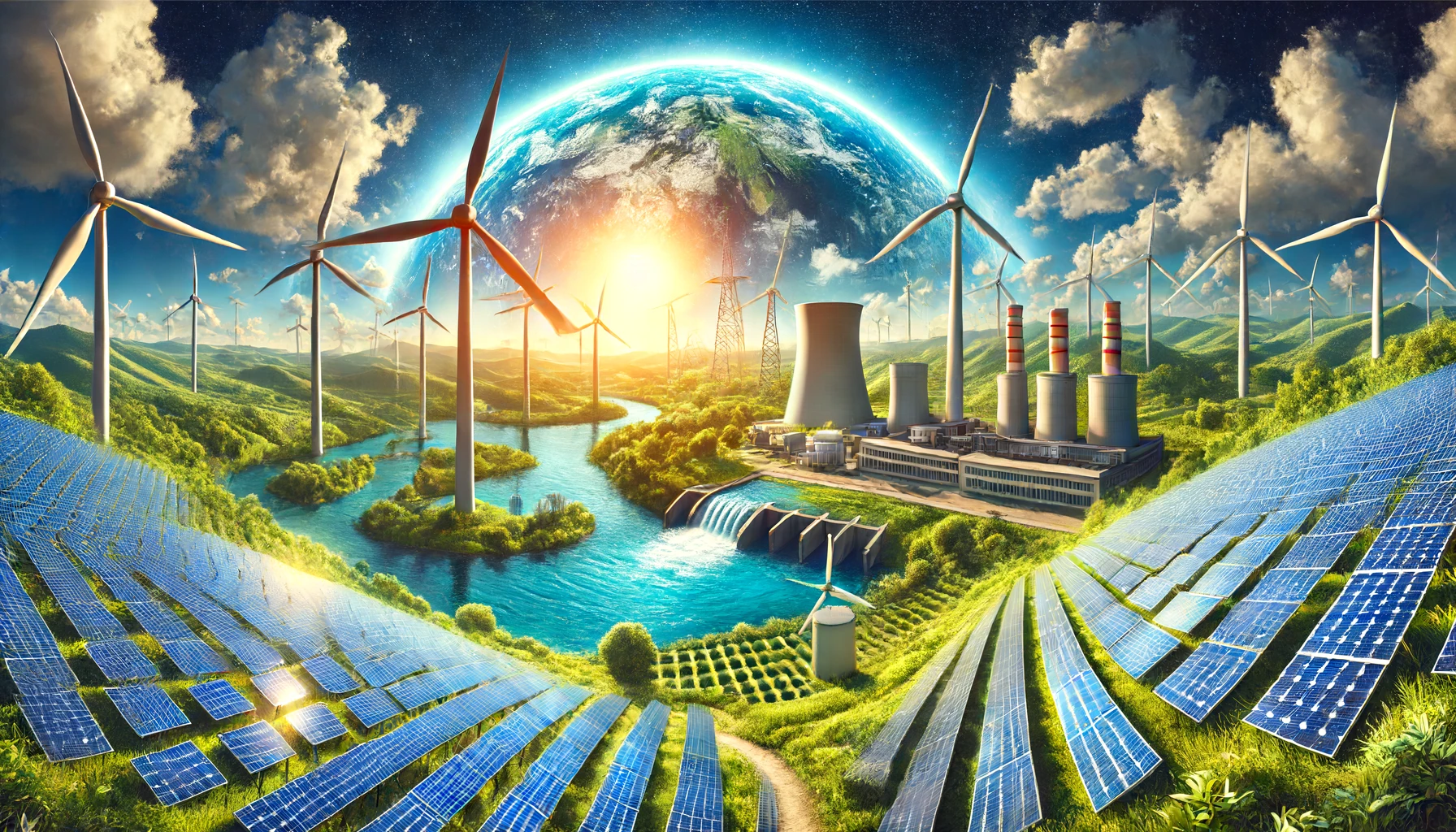
In 2026, energy is no longer a background cost on a balance sheet. It is strategy. It is diplomacy. It is leverage.
For years, the business world spoke about energy in soft language, transition, sustainability, long-term targets. Today, the tone is harder. Energy decides who manufactures cheaply, who controls supply chains, who attracts capital, and who gets geopolitical breathing room.
The global economy has entered a new energy age, and it is messy, competitive, and brutally real.

The Myth of a Clean Break Is Over
The world did not move neatly from fossil fuels to renewables. It layered them.
Oil and gas are still critical, especially for aviation, heavy industry, shipping, and chemicals. At the same time, renewables are scaling at record speed. The result is not replacement, but overlap, and that overlap is expensive.
Countries that misunderstood this paid the price earlier. Those that balanced energy security with transition are now in a stronger position.
The message for 2026 is clear. Energy independence matters more than energy ideology.

Energy Has Become a National Security Asset
Governments now treat power generation like defence.
The United States continues to push domestic manufacturing and energy resilience through policies that favour local production and grid stability. Europe is still recovering from the shock of Russian energy dependence, accelerating investments in solar, wind, LNG terminals, and nuclear restarts.
Meanwhile, the Middle East is repositioning itself. Oil-rich nations are using today’s cash flows to buy tomorrow’s energy relevance. Massive investments into solar, hydrogen, and grid infrastructure are no longer PR moves. They are survival planning.
Saudi Aramco remains one of the world’s most profitable firms, but its capital allocation tells a bigger story. Oil is funding diversification, not denial.
Electricity Is the New Bottleneck
The energy debate used to focus on generation. In 2026, the real constraint is transmission.
Data centres, EV charging networks, AI compute clusters, and electrified factories are all competing for the same grid capacity. In many countries, power exists, but it cannot move fast enough or far enough.
This has pushed grid modernisation into boardroom discussions. Utilities are no longer boring. Grid software, storage systems, and power management tools are attracting serious capital.
The quiet truth is this. Whoever fixes the grid controls the next decade of growth.

Energy Costs Are Reshaping Global Manufacturing
Energy pricing is now a competitive advantage.
Manufacturing is drifting toward regions with stable, cheap, and predictable power. This is one reason Southeast Asia, parts of the Middle East, and North America are attracting new industrial investment.
Europe, despite its green leadership, faces a tough trade-off. Cleaner energy has come with higher costs, pressuring heavy industries like steel, chemicals, and cement.
For global companies, plant location decisions in 2026 start with one question. Where is power cheapest over the next 20 years, not next quarter.

Climate Goals Are Colliding With Reality
Corporate climate commitments are being tested.
Many companies promised net-zero targets without fully pricing the cost of transition. Now, as carbon reporting tightens and energy prices fluctuate, those promises are meeting spreadsheets.
This does not mean climate action is slowing. It means it is becoming more pragmatic.
Companies are prioritising efficiency, electrification, and supply chain emissions over headline pledges. Less talk. More engineering.
Markets like the European Union are forcing this shift through regulation, carbon pricing, and disclosure rules that directly affect trade competitiveness.

Energy Is Back in the Boardroom
For years, energy decisions lived with operations teams. In 2026, they sit with CEOs and CFOs.
Long-term power purchase agreements, private renewable assets, captive power plants, and energy hedging strategies are now part of corporate strategy. Businesses want control, not exposure.
Even tech companies, once asset-light by design, are locking in energy supply to support compute-heavy workloads.
Energy is no longer a utility. It is infrastructure strategy.

The New Business Reality
The global business atmosphere in 2026 carries a simple truth.
Growth is no longer limited by ideas or capital alone. It is limited by electrons.
Who has reliable power.
Who can afford it.
Who can secure it long-term.
These questions now sit underneath every expansion plan, every factory build, every data centre, and every national growth narrative.
The energy transition did not make energy less important.
It made it central again.
And in this new era, the winners will not be the loudest voices in the climate debate, but the quiet operators who understood that power, in every sense, still runs the world.