

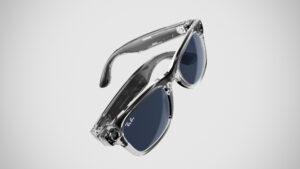
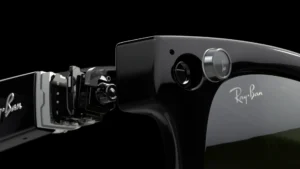
When Meta launched Ray-Ban smart glasses years ago, most people saw them as a niche experiment. In 2024, that same product line crossed a line from novelty to real tech shift. The updated Ray-Ban Meta AI glasses, powered by on-device and cloud-based AI, are now being used daily, not just tried once and forgotten. The breakthrough is not the hardware itself. It is the moment AI left the phone and slipped onto the face.
This is one of the clearest signals of where global technology is heading next.
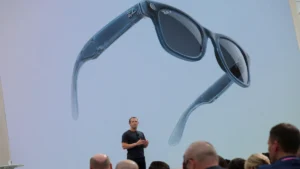
From Awkward Experiments to a Wearable AI Moment
The original problem was simple but hard. Smartphones made us constantly look down. Voice assistants lived in phones but felt clumsy. Smart glasses had failed before. Google Glass became a privacy nightmare. Snap Spectacles never became essential. Investors assumed face tech was socially dead.
Meta did not start with ambition. It started with restraint. The company partnered with Ray-Ban to hide technology inside something people already loved wearing. Early prototypes were basic: camera, speakers, mic. No screen, no flashy AR. Even inside Meta, teams debated whether this was too small a vision.

The turning point came with generative AI acceleration. Large language models suddenly made voice interactions natural. Computer vision could identify objects instantly. Meta’s engineers realised glasses did not need screens if intelligence could sit quietly in the background.
The first AI-enabled versions were rough. Voice lag, overheated hardware, battery limits. Engineers cut features instead of adding them. The breakthrough was architectural: pushing only lightweight tasks to the device and sending complex processing to the cloud.
The human motivation was clear. People wanted AI assistance without another screen. One engineer described it internally as “AI that waits, not interrupts”.
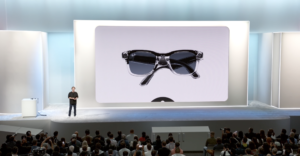
Why This Gadget Matters

1. The real innovation is invisible
The glasses work because they do not look innovative. No screen. No sci-fi design. Entrepreneurs often overbuild. Meta learned that mass adoption comes from familiarity, not spectacle.

2. Gadget plus AI beats AI alone
Chatbots are everywhere. What changed the game was pairing AI with a physical interface that lives in daily life. Hardware gave AI context. AI gave hardware a purpose. This is the direction consumer tech is moving toward.
3. Underlying technology stack
The system blends on-device sensors, edge computing for latency-sensitive tasks, and cloud-scale AI models for reasoning. This hybrid approach reduces cost and improves performance, and it is highly replicable across industries.
Founders should note this pattern. Do not solve everything on-device or in the cloud. Split intelligence smartly.

Business Models Unlocked
AI glasses open multiple revenue paths:
- Premium hardware sales with brand partnerships
- Subscription-based AI services
- Enterprise use cases like field support, logistics, and training
- Data-powered insights without traditional screens
This shifts monetisation beyond app stores. The platform owner controls interaction, commerce, and data flow.

Industries Set to Be Disrupted
- Retail: Real-time product recognition and price comparison
- Manufacturing: Hands-free instructions and inspections
- Healthcare: Documentation and guidance without breaking workflow
- Media: First-person content creation becomes frictionless
This is not AR hype. It is quite automated.
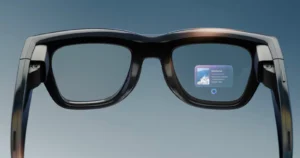
Challenges and Reality Checks
Adoption hurdles remain. Privacy concerns are real. Regulation around always-on cameras is coming. Battery life still limits heavy usage. Competition is heating up, with Apple and Chinese hardware players entering the same space.
Capital requirements are high. Consumer hardware needs patience, supply chains, brand trust, and distribution muscle. Most startups should not copy Meta, but they can build on the ecosystem around it.
Why This Matters Now
AI is moving from tools we open to systems that follow us. Smart glasses show that the next computing platform will be ambient, voice-led, and embedded in daily behaviour.
For founders and investors, the lesson is clear. The future is not another app. It is intelligence wrapped inside objects people already accept.
The companies that win next will not shout innovation. They will wear it quietly on a human face.