
From Open Source to Unicorn
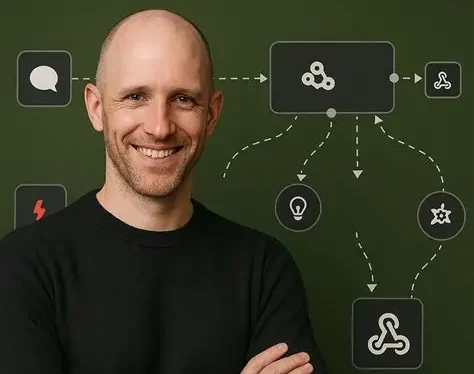
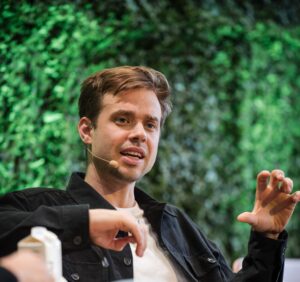
In December 2023, Swedish entrepreneurs Anton Osika and Fabian Hedin launched Lovable, an AI startup born from an open-source success story. Osika had earlier created gpt-engineer, a GitHub project that could turn plain-language prompts into full applications. The response was massive, drawing a global developer community and proving there was real demand for AI-assisted coding. By late 2024, they formalized the idea into Lovable, a platform that builds production-grade apps from simple text instructions.
Osika’s deep technical skills and Hedin’s knack for building scalable developer tools made them an ideal founding pair. They learned fast, iterating through failed prototypes before finally striking gold in November 2024.

Cracking a Massive Market Gap
The world is short on software engineers, yet businesses need to build faster than ever. Traditional no-code tools simplify things but lack flexibility. Lovable steps into that gap, offering the speed of no-code and the control of professional coding. The platform allows users to describe what they want in natural language, and its AI generates full codebases clean, modular, and ready to deploy.
The timing couldn’t be better. The low-code/no-code industry is expected to hit over $50 billion by 2028, and Lovable is positioned at the frontier of that shift, targeting startups, small enterprises, and global corporations alike.

A Smarter Business Model
Lovable runs on a subscription-based model, with pricing tiers for individual builders, startups, and large enterprises. Entry-level users can start for free, while advanced tiers offer custom integrations and dedicated support. The simplicity of this model, coupled with clear value delivery, has driven explosive growth.
By mid-2025, Lovable had already crossed $100 million in annual recurring revenue (ARR), a staggering feat within eight months of launch. That momentum attracted major investors; its $200 million Series A led by Accel in July 2025 valued the company at $1.8 billion.

Momentum and Scalability
Lovable’s traction comes not just from hype but from genuine adoption. Developers love its transparency every line of generated code is editable. Businesses love the turnaround speed. Teams across Asia, Europe, and the US are using it to prototype products, automate workflows, and build new SaaS offerings.
The company’s infrastructure is built for scale: AI generation happens in the cloud, and its systems integrate with GitHub, Docker, and AWS. This allows teams worldwide to collaborate without friction.

Rivals, Risks, and Realism
Competition is fierce. Lovable faces established players like Webflow and Bubble, along with newer AI-driven code generators. But most rivals either produce limited prototypes or lock users into rigid ecosystems. Lovable’s secret weapon is code quality; its apps can evolve like hand-written software, making it a serious threat to both legacy low-code and traditional development.
The Bigger Vision
Beyond profitability, Lovable aims to democratize software creation. Its mission is to empower anyone with an idea, entrepreneurs, designers, even non-technical founders to build real digital products without coding. The team envisions a future where AI agents continuously improve software, making technology a true collaborator rather than just a tool.

A Glimpse of the Future
Lovable’s rise from a niche GitHub project to a global unicorn in under two years shows how fast AI can transform entire industries. If it maintains its discipline and innovation streak, Lovable could redefine not only how software is built but who gets to build it. In a world racing toward automation, Lovable is proving that creativity, not code, is the new foundation of innovation.