
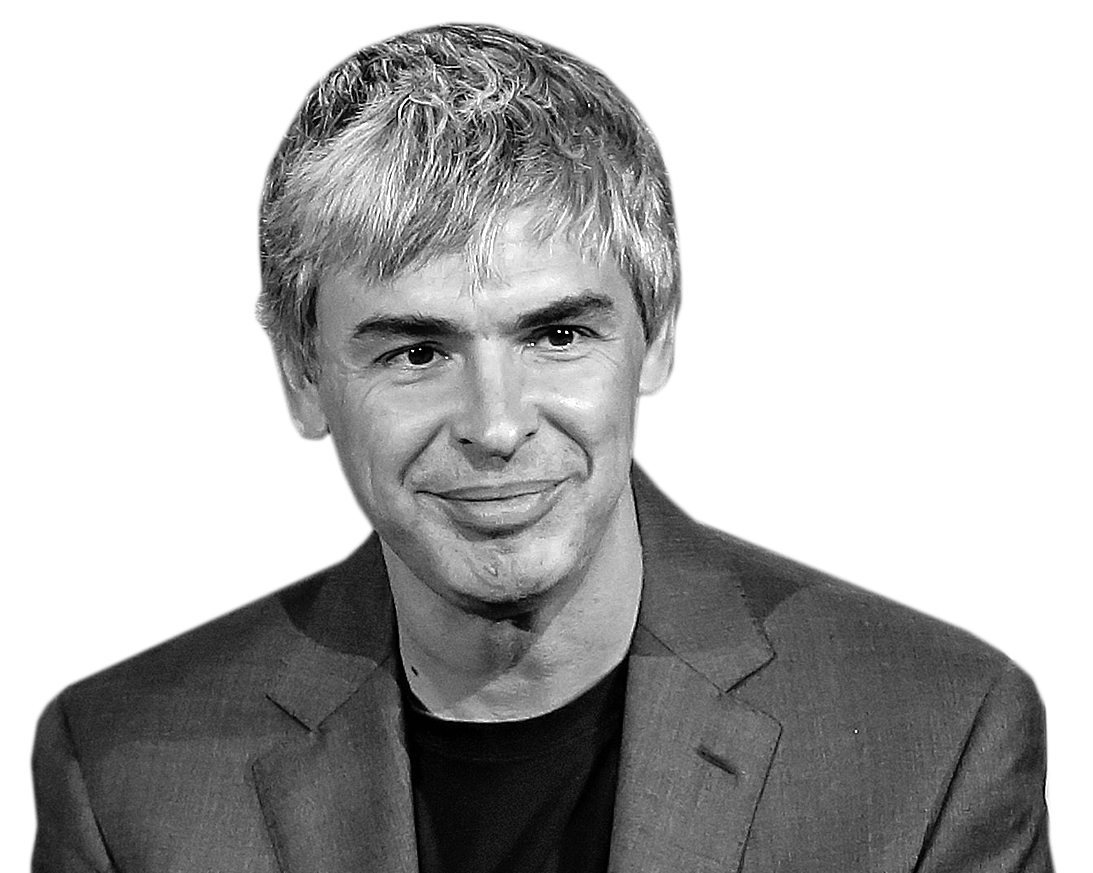
When you picture the architects of the internet, Larry Page is the quiet one who built the room, then left to redesign the roof. He isn’t the loud CEO on magazine covers, but the engineer whose fingerprints are everywhere: search, ads, self-flying aircraft, and healthcare. His mix of obsessive engineering and long-term vision made Google one of the most consequential companies of our age, and Page one of the most influential business minds alive.

A curious kid who loved to break things
Page’s story began in Michigan, not Silicon Valley. The son of computer science professors, he grew up surrounded by machines and ideas, tinkering before he even knew what a startup was. After studying engineering at the University of Michigan, he joined Stanford, where he met Sergey Brin. Their collaboration on ranking web pages by links became PageRank, the core of Google. It was elegant, technical, and accidentally world-changing.
People who worked with Page describe him as curious, impatient with rules, and allergic to corporate rituals. He built Lego as a kid and treated Google the same way, as a system to be improved, not managed. That mindset shaped Google’s early culture, where products came before PowerPoint.

From garage project to global backbone
Google grew from a dorm idea to a garage startup, then into the sprawling Mountain View campus. Search evolved into an ad engine, then into Android, cloud computing, and AI. Page led in the early years, then again in the 2010s, before reorganising Google into Alphabet in 2015. The goal was to let core businesses fund ambitious “moonshots” like Waymo and Verily. The split reflected Page’s belief in autonomy and experimentation.
He trusted engineers, prized independence, and wanted leaders to think like inventors. That freedom fuelled innovation but also drew criticism when Google became a political actor. Still, it allowed rapid cycles and bold risk-taking that few companies matched.

The turning points
Three moments defined Page’s career: monetising search through ads, creating Alphabet, and stepping back as CEO in 2019 to let Sundar Pichai lead. The last marked the end of an era, though Page retained control and continued guiding long-term bets from behind the scenes.
Page never liked the spotlight. Stepping back suited him, giving space to work on private projects. Steve Jobs once told him he was taking on too much; Page listened, refocusing on ideas rather than management.

The private portfolio
Page’s private investments reveal a clear worldview: move people and information more efficiently. He has funded aviation startups like Kitty Hawk and Wisk, renewable energy research, and AI ventures. Some failed, others merged, but all shared one trait—hard engineering problems with transformative potential.
He backs small, fast teams with big goals. That’s how Google began, and it remains his approach: deep tech first, products later. In a world obsessed with quarterly results, Page still plays the long game.

Leadership in an age of scrutiny
Google’s rise also brought challenges—antitrust probes, employee protests, and ethical questions. Page’s hands-off style built speed but left governance gaps. His answer has always been technical: better algorithms, more computing power, smarter systems. It’s an optimistic, sometimes controversial belief that technology itself can fix social problems.

A founder who became an institution
Page’s impact extends beyond wealth. He shaped Google’s culture—moonshots, autonomy, and fearless experimentation—that inspired startups worldwide. Whether that model still fits today’s complex world is debatable, but its influence endures.
He values engineering joy, long horizons, and privacy. His low profile fuels mystery, yet his ideas continue to steer industries. His wealth funds research that governments hesitate to touch.

What the future looks like
Page’s philosophy is simple: back infrastructure that multiplies human capability. Pick projects requiring real breakthroughs, not marginal upgrades. Give teams freedom, reward curiosity, and accept failure. That mindset will keep shaping tech for decades.
For founders everywhere, especially in India, Page’s story offers a lesson: build systems that solve real constraints, but also ask who governs them when they scale. The next generation must pair his optimism with sharper civic responsibility.
Final note
Larry Page isn’t a myth; he’s a method. Invest in hard problems. Give engineers time. Ignore short-term noise. He built tools billions use and funds ideas that may redefine the future. Quietly, he keeps remaking the world.