
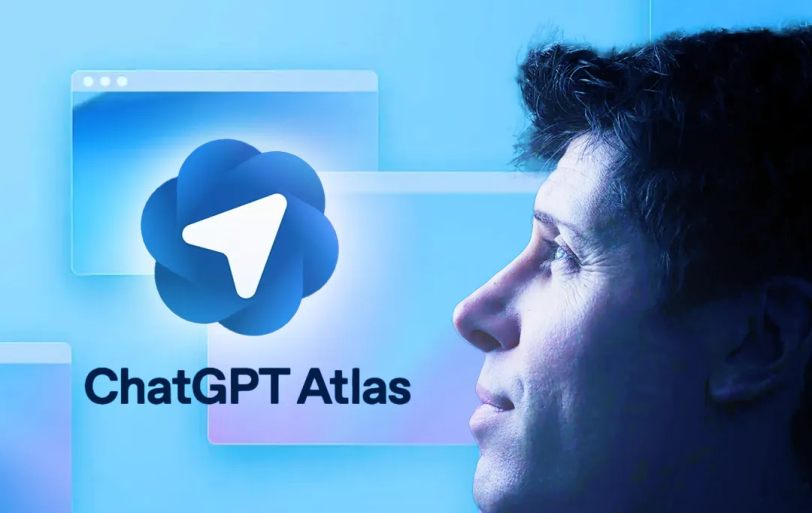
When ChatGPT became indispensable, people stopped asking whether AI could change search. They started asking how. OpenAI’s answer this week is direct and unapologetic, it is a browser called ChatGPT Atlas, and it puts a conversational AI at the centre of how people navigate the web. The move is bold, messy and ambitious, and it looks like the start of a much bigger fight over attention, data and advertising revenue.

Atlas launched on October 21, 2025, on macOS, with Windows, iOS and Android versions promised soon. On the surface it looks like Chromium with new clothes. Under the hood, OpenAI has stitched ChatGPT into the browsing experience so the assistant can summarise pages, compare products across tabs, answer follow-ups about what you are reading, and, in a paid preview called Agent Mode, actually carry out workflows for you. That might mean searching for flights, opening pages, filling forms and returning a curated shortlist. For people who hate tab chaos, Atlas promises to be a productivity broom. For Google, it is a direct threat.
The strategic logic is straightforward. Browsers are still the most common gateway to the internet. Chrome had roughly a 72 percent market share as of September 2025, and that dominance funnels an enormous amount of ad revenue and search traffic to Google. If OpenAI can move even a fraction of browsing time into a ChatGPT environment, it gains not just eyeballs but leverage. Atlas could sharpen OpenAI’s data signals, deepen paid subscriptions, and create new ad or commerce plays. No wonder Alphabet’s shares dipped after the launch.

But this is also a hardware and software problem disguised as user experience. Building a compelling browser requires more than a clever sidebar. Extension compatibility, speed, and the small details that make people loyal to Chrome or Safari are hard to replicate. Chromium gives OpenAI a starting point, but extensions and ecosystems are not just code they are habits. Agents that click around acting for you will need strong sandboxing to avoid security problems. They will need to handle the chaotic edge cases of the modern web. Early reviews have praised Atlas for its ambition but warned that real-world reliability will make or break it.
Privacy is the next battlefield. OpenAI has emphasised that browser memories are off by default, and users can delete stored data anytime. That is smart positioning. But for enterprises and regulators, the question is how those memories interact with corporate policies and data laws. If Atlas gains traction in workplaces, administrators will demand granular controls. Regulators will scrutinise how browsing data might feed model training or ad targeting. OpenAI’s documents sound confident, but the market will test that confidence.
Then there is the Microsoft angle. OpenAI’s biggest partner also owns Edge, another Chromium browser that now embeds Copilot. Microsoft is both investor and infrastructure provider, yet it competes in the same product category. It is a delicate dance. Will Microsoft double down on Edge while supporting OpenAI’s infrastructure ambitions? Will users gravitate to Atlas for a pure ChatGPT experience? For now, OpenAI has the momentum and brand halo, but turning that into retention is a different challenge.
For businesses worldwide, Atlas is both a disruption and a signal. It is a disruption because it changes how consumers discover content, products, and information. Traditional SEO and keyword-based marketing may lose ground to “conversational optimisation” building web experiences that AI agents can understand and summarise accurately. It is a signal because it shows where the next battleground lies: not search results, but context and action. If Atlas succeeds, the web will become less about links and more about answers that feel personal.

OpenAI’s decision to build its own browser is also a declaration of independence. It marks a shift from living inside partner ecosystems to owning the interface layer. That is a risky but necessary evolution. Running a browser means owning the user’s attention from first click to last, but it also means managing updates, bugs, security patches and regulators. It is a product category that punishes missteps. Yet the upside is enormous. If Atlas becomes the default entry point for ChatGPT’s 200 million monthly users, OpenAI’s future will look more like an internet company than a research lab.
Atlas will not dethrone Chrome overnight. Browsers are habits, and habits change slowly. But revolutions rarely begin loudly. They start quietly, with small, frictionless improvements fewer clicks, smoother flows, a new way to get things done. Atlas fits that pattern. For investors, the question is whether OpenAI can turn that convenience into sustainable revenue. For users, it is whether the convenience is worth the trade-offs. Either way, the browser wars just got interesting again.