

From Bedroom to Boardroom
The story does not begin in a boardroom. It begins in a bedroom, with a wedding invite, a price tag that made no sense, and a question that lingered longer than expected. Why did ambition in fashion demand ownership, even when the moment passed in a single night?
For Jennifer Hyman, that question never really left. She grew up around retail, understood consumer desire early, and learned how emotional spending could collide with financial reality. At Harvard Business School, surrounded by spreadsheets and certainty, she fixated on an irrational system that everyone had accepted as normal.
The idea of renting designer fashion sounded clever. In reality, it was inconvenient, capital-intensive, and deeply unfashionable to investors. But Hyman was not chasing elegance. She was chasing usage.

A Closet, a Wedding, and a Crack in the System
Hyman’s origin story is well told, but its emotional core still matters. As a Harvard MBA student, she watched her younger sister panic over what to wear to a wedding. The dress she wanted was wildly expensive for something she would wear once. The moment exposed a quiet inefficiency in fashion, aspiration was priced like ownership, even when use was fleeting.
Hyman did not come from fashion royalty. She grew up in Connecticut, worked early retail jobs, and learned firsthand how consumer desire collides with price ceilings. At Harvard Business School, surrounded by future financiers and operators, she sharpened the idea with her co-founder Jennifer Fleiss. Why couldn’t women access designer fashion the way companies access cloud software, on demand, without owning the asset?

When Fashion People Said No
Early meetings were rough. Designers worried about dilution. Investors worried about logistics. Consumers worried about hygiene. Almost everyone worried about scale.
What kept Hyman moving was repetition. The first customers came back. Then they came back again. Not for novelty, but for reliability. A dress that arrived clean, on time, and fit as promised built trust faster than any ad campaign.
That was the real beginning. Not the pitch deck. Not the press. The moment when behaviour proved belief.

A Closet Built Like a Factory
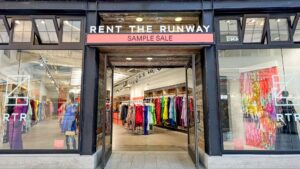
From the outside, Rent the Runway looked like a lifestyle brand. Inside, it ran more like industrial infrastructure. Warehouses, cleaning technology, RFID tracking, garment lifecycle data, all of it had to be invented or customised.
While fast fashion chased volume, Hyman chased utilisation. How many lives could one dress live? That single question shaped inventory buys, pricing, and supplier relationships. It also made the business brutally hard.
If your model fights physics, romance will not save you. Systems might.
Building a Company, Not a Campaign
Her fundraising strategy reflected that long view. Rent the Runway raised significant capital, but always to build systems, not just growth. When the company went public, the timing was brutal. Public markets were turning. Loss-making consumer tech was out of favour. The stock struggled.
Instead of chasing hype, Hyman did something unfashionable. She slowed expansion, tightened inventory buys, and refocused on profitability. The era of growth without operational clarity is over. Hyman adjusted early.

The Pandemic That Killed the Party
Then came the moment that should have ended everything. COVID nearly broke the business. Events vanished overnight. Events disappeared. Weddings stopped. Offices closed. Rentals collapsed overnight.
Instead of freezing, Hyman rewired the business. Occasion wear stepped aside. Everyday workwear moved in. Subscriptions were rebuilt around real life, not fantasy life. The company stopped selling dreams and started supporting routines.
Layoffs were painful. Decisions were public. But the reset worked. By the time social life returned, the company had a broader base and a sharper spine.

Culture That Knows Its Limits
This is not a company that worships speed. Engineers argue with merchandisers. Data teams influence fashion taste. Meetings are slower than Silicon Valley would like, but mistakes are fewer.
Hyman built a culture that respects constraint. For operators, this matters. Culture is not vibes. It is how a company behaves when margins get thin and optimism runs out.
Why 2026 Belongs to This Model
As we move into 2026, Hyman’s relevance sharpens. Consumers are cautious. Sustainability is no longer optional. Owning less feels smart, not sacrificial.
The next phase is about efficiency, not evangelism. Smarter pricing. Better demand forecasting. Designer partnerships that treat rental as discovery, not discounting. Global expansion that respects logistics instead of chasing flags on a map.
Hyman is not trying to win fashion. She is trying to rewire consumption.

Staying Is the Strategy
Jennifer Hyman did not build the loudest company in fashion. She built one that stayed. Through scepticism, public markets, and a pandemic that erased her core use case.
For founders reading this in 2026, the lesson is quietly radical. The future will not reward those who grow the fastest. It will reward those who understand what their business can endure.
Sometimes, the most disruptive thing you can do is refuse to leave the room.