
Look closely at today’s economy and you’ll notice something unsettling. Growth exists. Profits exist. Innovation exists.
But comfort doesn’t.
Across countries, the middle class is being quietly compressed, not collapsing overnight, not disappearing dramatically, but thinning year after year. This shift is shaping consumer behaviour, labour markets, politics, and corporate strategy in ways businesses can no longer ignore.

The Centre Used to Carry the System
For decades, the global middle class was the engine of stability.
They bought homes. Upgraded cars. Took vacations. Paid taxes reliably. Powered mass-market brands. Filled corporate offices.
Economic planning assumed they would keep expanding.
That assumption is breaking.

Wages Moved, Costs Ran
In many economies, wages have risen nominally. On paper, incomes look higher.
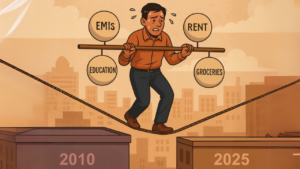
In reality, housing, healthcare, education, insurance, and energy costs rose faster and stuck. The gap between earning and living widened quietly.
This isn’t poverty. It’s pressure.
Middle-income households feel constantly behind, even when employed, even when “doing well”.
Consumption Is Splitting in Two
The business impact is visible.
Premium brands continue to find buyers. Discount brands stay busy. Mid-tier brands struggle.
Consumers either trade up occasionally or trade down consistently. The middle option feels like bad value.
This polarisation is why mass-market retailers, airlines, food chains, and even streaming services are rethinking pricing, packaging, and positioning.
The middle-class consumer is still spending, just more selectively, more anxiously, and less loyally.

Asset Ownership Became the Divider
The real line today isn’t income. It’s assets.
Those who bought homes or equities earlier benefited from asset inflation. Those who didn’t are locked out or late.
This creates two groups earning similar salaries but living radically different lives.
For businesses, this means lifestyle segmentation matters more than income brackets. The same paycheque now supports very different consumption patterns.

Work Feels Less Predictable
Stable careers used to anchor middle-class confidence.
Now, layoffs are normalised. Automation is creeping. Contract work expands. Even “good” jobs feel temporary.
This uncertainty makes people conservative.
They delay big purchases. They avoid long-term commitments. They hoard cash emotionally, even when they can’t financially.
Fear shapes demand more than aspiration.

Governments Are Struggling to Respond
Policy frameworks were built for a growing middle, not a shrinking one.
Tax systems strain. Welfare doesn’t quite apply. Housing policy lags reality. Education costs outpace returns.
Political frustration grows, but solutions remain slow, fragmented, or polarising.
Businesses are left operating in the gap between policy and reality.
Why Companies Are Paying Attention Now
The middle class isn’t just a social group. It’s a revenue base.
When it weakens, predictable demand weakens. Volume growth slows. Forecasting becomes harder.
Companies now track affordability metrics alongside GDP. They test smaller pack sizes, flexible subscriptions, and modular pricing.
The goal isn’t expansion. It’s retention.

The Global Business Mood This Creates
Caution over confidence.
Efficiency over scale.
Value over volume.
This is why growth feels slower even when innovation is high. The consumer base is more stressed, more divided, and more intentional.

The Picture
The middle class isn’t vanishing. It’s being stretched thin.
That tension reshapes how people work, spend, vote, and plan their futures. It reshapes how companies price, market, and grow.
In today’s business atmosphere, success doesn’t come from assuming a comfortable middle. It comes from understanding a pressured one.
The centre still exists.
It just carries more weight than ever before.