Nobody announces it.
Nobody celebrates it.
But across the global economy, one idea has settled in.
Prices are not going back.
Not to 2019. Not even to 2022. What businesses and consumers are living through in 2026 isn’t temporary inflation. It’s a structural repricing of how the world works.
And once you see it, you can’t unsee it.

Inflation Ended, But Expensive Stayed
Official inflation numbers are easing in many countries. Central banks declare progress. Rate cuts are debated.
Yet groceries still hurt. Rent still bites. Travel still feels premium. Services still cost more than expected.
That’s because inflation slowing doesn’t mean prices fall. It just means they stop rising as fast.
Businesses absorbed higher wages, energy costs, logistics, compliance, and financing. Those costs didn’t disappear when inflation cooled. They were baked in.
The result is a new price floor.

Companies Are No Longer Competing on Price
This is the quiet shift.
In many sectors, companies stopped competing aggressively on price because margins simply can’t handle it. Instead, they compete on packaging, bundling, convenience, loyalty, and perceived value.
Smaller portions. Fewer discounts. Subscription nudges. Add-ons framed as “experience”.
The sticker shock is managed psychologically, not financially.
Price wars are risky again. Stability beats volume.

Wages Rose, But Not Evenly
One reason the new price reality sticks is wages.
In parts of the economy, especially skilled services, tech-adjacent roles, healthcare, and logistics, wages stepped up and never stepped back down.
That created a mismatch.
Some consumers can absorb higher prices. Others can’t. Businesses now operate in a split-demand world, premium lanes grow, budget lanes get crowded and fragile.
The middle feels squeezed. That tension shows up everywhere, from airline cabins to food brands.

Central Banks Lost Their Old Superpower
For decades, central banks could cool demand and watch prices fall.
This cycle exposed limits.
Rate hikes slowed spending but didn’t fully reverse cost pressures tied to geopolitics, supply chains, energy transitions, and labour shortages. Monetary policy can’t fix a fractured world.
So businesses stopped waiting for relief from above. They adjusted internally.
New contracts. New suppliers. New pricing logic.
The reset became permanent.
Consumers Didn’t Rebel, They Adapted
The surprise wasn’t outrage. It was resignation.
People changed behaviour instead of protesting prices. Fewer impulse buys. More comparisons. Less loyalty. More trading down. More delaying.
Big purchases now require justification. Small indulgences survive because they feel controllable.
This is why luxury and essentials can grow at the same time, while mid-tier discretionary brands struggle.
Emotion drives spending more than economics.

The Hidden Impact on Global Trade
Higher prices changed trade patterns too.
Long supply chains became less attractive. Inventory buffers grew. Nearshoring made sense even if labour costs were higher.
When everything is expensive, predictability matters more than cheapness.
Trade flows now optimise for reliability, not lowest cost.
Why This Matters for the Business Climate
The permanent price rise changes how business thinks.
Forecasts assume higher baseline costs.
Growth targets are more conservative.
Efficiency matters more than expansion.
Volume is less exciting than margin quality.
Risk appetite shrinks, not because companies are scared, but because mistakes cost more now.
This creates a quieter economy. Less exuberance. Fewer moonshots. More caution.
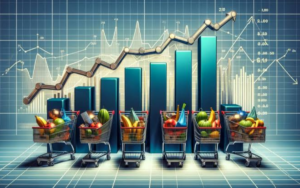
The Psychological Shift Nobody Talks About
The most important change isn’t financial. It’s mental.
Businesses and consumers both stopped expecting prices to “normalise”.
Once that expectation disappears, behaviour locks in.
Companies stop discounting aggressively.
Consumers stop waiting for sales.
Markets recalibrate around acceptance, not optimism.
That’s when a temporary shock becomes a permanent structure.

The Big Picture
The global business atmosphere in 2026 is not about crisis or collapse. It’s about adjustment.
The world is more expensive, more fragmented, more cautious.
Not broken. Just heavier.
Those who understand this aren’t chasing the past. They’re building models that work in a world where cheap is gone, stability is expensive, and pricing is no longer a lever you pull lightly.
The price rise didn’t end.
It settled in.
And global business is learning how to live with it.