
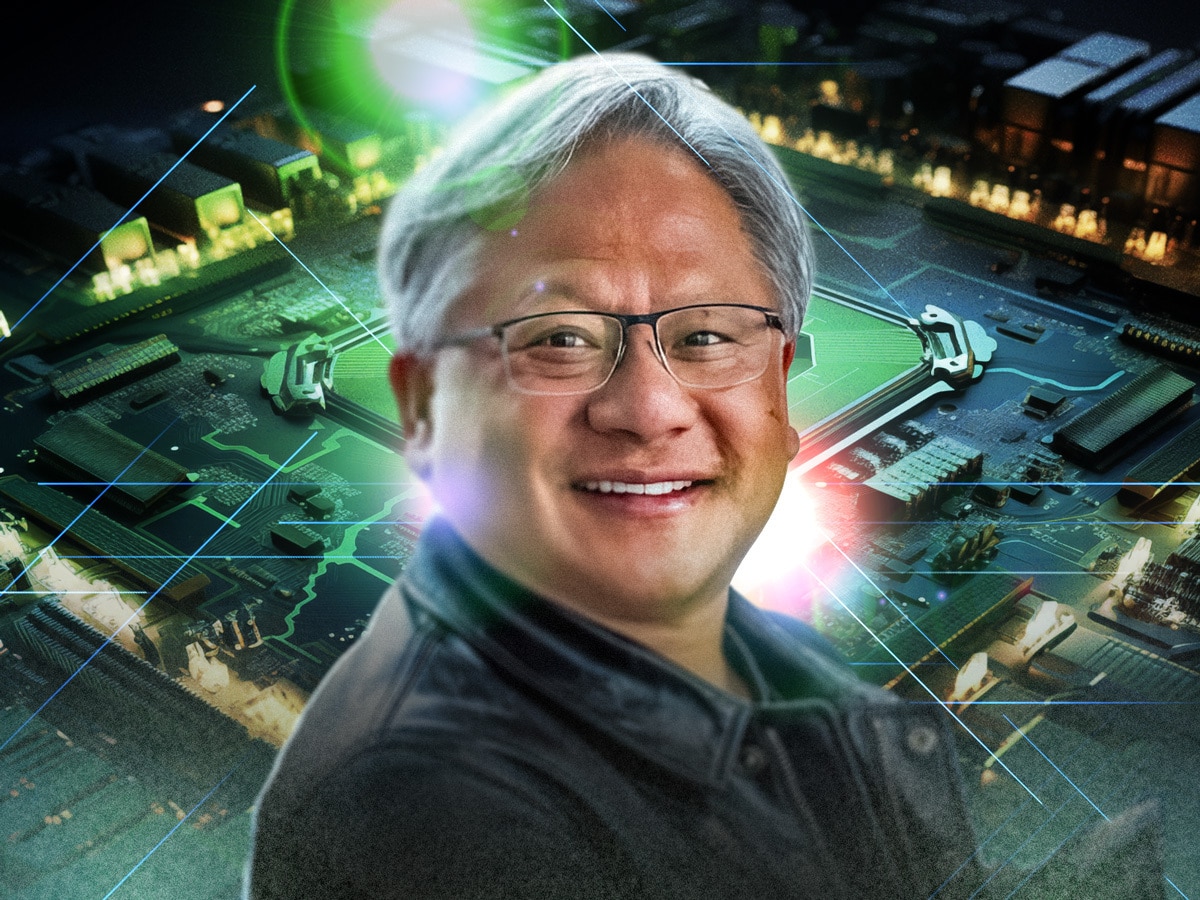
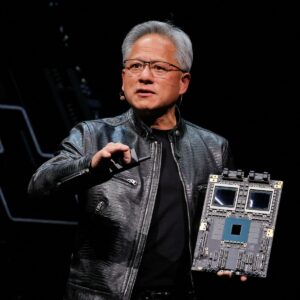
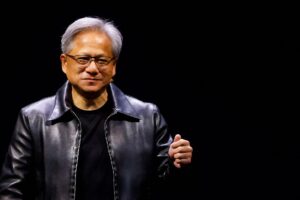
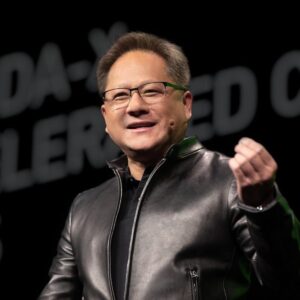
In January 2025, on a packed CES stage, Jensen Huang stood in his usual black leather jacket, holding a graphics chip like a prop from the future. In front of 6,000 people, the Nvidia CEO called it “a beast” and spoke about computing with the same intensity most people reserve for politics or faith. At 61, Huang still treats engineering not as a department but as a belief system.
That year, Nvidia crossed a $5 trillion valuation, the first company to do so. Huang was named Financial Times Person of the Year and appeared on Time’s list of the Architects of AI. But this moment was not the result of a smooth climb. It came from decades of close calls, wrong bets, and a mindset shaped by surviving when failure felt permanent.
Huang’s story begins far from Silicon Valley. At nine, he arrived in the US from Taiwan, unable to speak English. Due to a mix-up, he and his brother were sent to a strict reform-style boarding school in rural Kentucky. He cleaned toilets every day. His roommates were older, rough, and often violent. To survive, he learned how to focus, negotiate, and adapt fast. Years later, Huang would say those years taught him something lasting. When there is no safety net, you learn to think clearly under pressure.
That pressure followed him into business.

The Survival Period
Nvidia was founded in 1993, but by 1996, it was close to collapse. The company’s first chip, NV1, failed badly. Huang had bet on a technically advanced approach to graphics that the market simply did not want. Microsoft’s DirectX standard went in another direction. Then Sega pulled out of a major deal. Nvidia’s revenue crashed. Losses piled up. Huang laid off half the company. At one point, Nvidia had only enough cash left to survive for a month.
Inside the company, Huang told employees a blunt truth: “We are 30 days from going out of business.” That line never went away. It became Nvidia’s internal mindset.
With almost nothing left, Huang made a hard call. He killed the technology he believed in and ordered the team to rebuild everything around industry standards. The new chip, RIVA 128, launched in 1997 with weeks of payroll left. It worked. Millions sold. Nvidia survived.

Huang did not treat survival as victory. He treated it as a warning. The lesson was simple and brutal: being right too slowly is worse than being wrong quickly. From then on, Nvidia learned to abandon its own ideas before the market forced it to.
That habit shaped everything that followed.
A CEO Who Builds
Most tech CEOs talk about products. Huang lives inside them. He still reviews chip designs personally. He understands memory bandwidth, transistor trade-offs, and system limits in detail. This is not for show. Nvidia ships entirely new chip architectures every year, not small upgrades. That pace only works if the person at the top understands exactly what the engineers are pushing against.
This deep technical focus shows up in Nvidia’s biggest bet: CUDA.
In 2006, Nvidia invested heavily in CUDA, a software platform that let developers use GPUs for tasks beyond graphics. At the time, it made little sense financially. Gaming chips were already profitable. Scientists and researchers were the only early users. For years, CUDA looked like a costly distraction.
Huang kept funding it anyway.

Today, CUDA is Nvidia’s strongest moat. Almost every major AI model runs on it. Hardware competitors can copy chips, but they cannot easily replace an entire software ecosystem built over nearly two decades. What once looked like wasted spending now underpins hundreds of billions of dollars in AI infrastructure.
Huang’s leadership style is intense. He avoids one-on-one meetings and prefers large group reviews where decisions happen openly and fast. Accountability is public. Pressure is constant. Employees say it is exhausting, but also addictive for people who want to work on the hardest problems in computing.
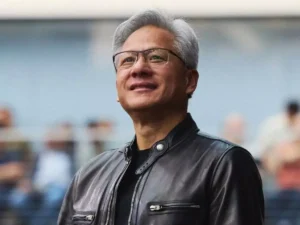
He also spends an enormous amount of time with customers. Hyperscalers, AI labs, telecom companies, governments. Huang listens for problems before they are fully defined. When AI models started demanding longer reasoning and more memory, Nvidia was already designing chips for that future.

The Risks Ahead
Nvidia’s competition is rising. Cloud giants are designing their own chips. Governments are restricting exports. China, once a major market, is largely closed. Infrastructure limits, like power and data centre construction, could slow adoption even if demand remains high.
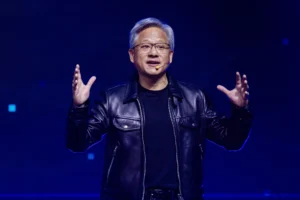
There is also the founder risk. Nvidia is deeply shaped by Jensen Huang’s personality. His energy, paranoia, and technical fluency drive the company. But they also make succession hard to imagine. What happens when he eventually steps back is an open question.
Still, Huang has shown one consistent trait. He does not protect old ideas. If the market shifts, he will shift faster. He already has, many times.
What the World Should Watch in 2026
If 2025 was the year Nvidia became impossible to ignore, 2026 is the year it has to prove it can stay ahead. The company is no longer just riding the AI wave. It is shaping what the next phase of AI even looks like.

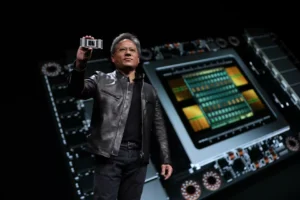
At the centre of this moment is Rubin, Nvidia’s next major chip architecture, scheduled to launch in the second half of 2026. Rubin is not a routine upgrade. Nvidia says it delivers more than three times the performance of Blackwell, its current flagship. More crucially, it introduces next-generation memory designed to remove one of AI’s biggest constraints: memory bandwidth.
That matters because AI itself is changing. New reasoning models do not just respond once and stop. They think longer, explore multiple paths, correct themselves, and handle massive amounts of context. This kind of intelligence is memory-hungry. Without fast, abundant memory, progress slows. Rubin is built for that future, not the last one.
Alongside it comes Rubin CPX, a new class of chips designed specifically for long-context AI. These systems are meant to understand entire codebases, long videos, or huge datasets in a single pass. Early users are already testing tools that can refactor entire software products, not just generate small snippets. If this works at scale, AI shifts from a costly experiment into a serious revenue engine. Nvidia’s projections may be optimistic, but the direction is unmistakable.
At the same time, Nvidia is pushing beyond the data centre. Through partnerships like its investment in Nokia, the company is embedding AI into telecom networks. The logic is simple. Future intelligence cannot live only in distant clouds. It has to run closer to users, devices, and sensors. If Nvidia becomes part of 5G and 6G infrastructure, it controls a new layer of the digital world, one that sits between the cloud and everyday life.
Another major bet is physical AI. With its Cosmos platform, Nvidia lets companies train robots, autonomous vehicles, and industrial machines inside realistic simulations before deploying them in the real world. By opening up this platform, Nvidia wants to do for robotics what CUDA did for AI software: become the default foundation. Once companies build on these systems, they rarely leave.
So in 2026, the world will be watching closely. Will Rubin deliver on its performance promises? Will reasoning-driven AI become mainstream? Will Nvidia’s platforms spread from data centres into networks, factories, and machines?
But beneath all of this sits a deeper question. Can a founder-led company keep reinventing itself at this scale?

Jensen Huang believes the answer lies in never feeling safe. In acting as if the clock is always ticking, even when the numbers say you have already won. The boy who once cleaned toilets in Kentucky now builds the systems powering global AI, yet he still runs Nvidia as if it has only 30 days left.
As 2026 unfolds, Nvidia is not slowing down. It is betting that the future demands more compute, more intelligence, and more ambition than ever before. And Huang is building for that future, one architecture at a time.